


- Best Smart Mattress With HRV Tracking: Track Recovery While You Sleep - August 28, 2026
If you already use a smartwatch, fitness tracker, or smart ring to monitor your recovery, you probably know how useful overnight data can be. But imagine finishing a long, exhausting day, climbing into bed, and realizing you forgot to charge your device. Or maybe you did remember, but you don’t particularly enjoy sleeping with a device on your wrist or finger. Now you’ve gone through the entire night without the recovery data you were hoping to collect.
But mattress-based tracking is different. Smart mattresses can collect sleep metrics and biometric data, including heart rate, HRV (heart rate variability), and respiratory rate, without requiring a wearable.
For athletes and serious recreational exercisers, that distinction can be more meaningful than it sounds. Sleep is when your body is recovering from the training you put it through during the day, so having a consistent source of overnight HRV data can help you see how your body is responding to your training load, sleep habits, stress, and other factors.
What Is HRV, and What Can It Tell You About Training Recovery?
Heart rate variability measures the small variations in time between individual heartbeats. Unlike resting heart rate, which simply tells you how fast your heart is beating, HRV gives you information related to how your autonomic nervous system is responding to different demands.
For athletes, the important part isn’t necessarily whether your HRV is high or low. There isn’t one ideal HRV number that applies to everyone. What matters more is how your measurements compare with your own normal range and how those measurements change over time.
For example, imagine you’ve had several hard training days in a row. Your scheduled workout might tell you it’s time for another hard session, but your overnight data could show that your HRV has remained noticeably below your personal baseline for several days. That doesn’t automatically mean you shouldn’t train, but it gives you another reason to look at the bigger picture.
You could combine your HRV trend with other signals, including:
- How well you slept
- Resting heart rate
- Muscle soreness
- Perceived fatigue
- Recent training volume and intensity
- Mood and stress
- Performance during recent workouts
Taken together, these signals can give you a better sense of how your body is handling your current training load and whether it might make sense to follow your original plan or modify the day’s workout.
The key is to look for patterns rather than panic over one unusual reading. HRV can fluctuate from day to day, and factors unrelated to exercise can affect it. Establishing your own baseline and watching how your HRV changes over several days or weeks can give you much more useful information than a single unusually high or low number.
What Does a Smart Mattress Add Beyond HRV Tracking?
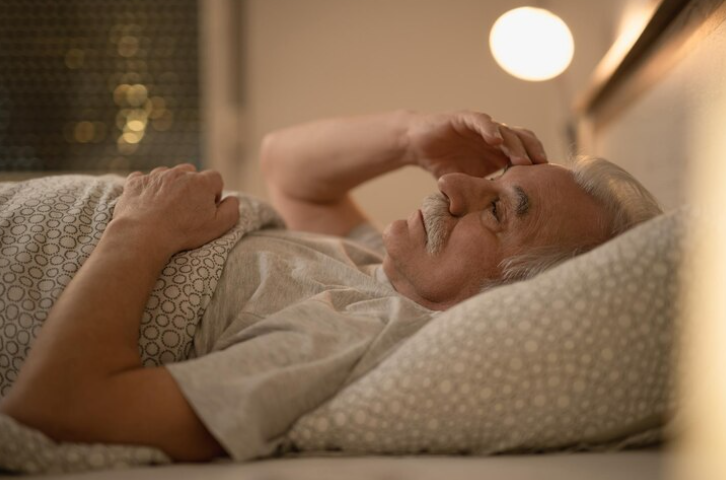
HRV tracking is only one part of what a smart mattress can offer. Unlike a traditional mattress, a smart mattress can combine sleep tracking with technology designed to monitor or adjust your sleep environment.
Depending on the system, smart mattresses and sleep systems may track information such as heart rate, respiratory rate, sleep stages, movement, and other sleep metrics. Some can also detect things like snoring or changes in your sleep patterns over time. Instead of relying on a wearable to collect this information, sensors built into or underneath the mattress can monitor you while you sleep.
Some smart mattresses also go a step further by actively changing the sleep environment. Temperature regulation is one of the most common examples. A system that can heat or cool the sleep surface can help you maintain a more comfortable temperature throughout the night, which can be particularly useful for people who tend to sleep hot or for couples who prefer different temperatures.
Other features can include smart alarms, automatic temperature adjustments, sleep environment controls, and integrations with health and fitness platforms. The exact features vary considerably from one smart mattress or sleep system to another, so it’s worth looking at what a particular product actually offers rather than assuming every smart mattress has the same capabilities.
Smart Mattress Options To Consider
If you’re specifically looking for a smart mattress or sleep system that can track HRV, there are a few options worth considering. The biggest differences come down to how much of the sleep environment each system controls, how much it costs, and whether you have to replace your existing mattress.
Eight Sleep Pod 5
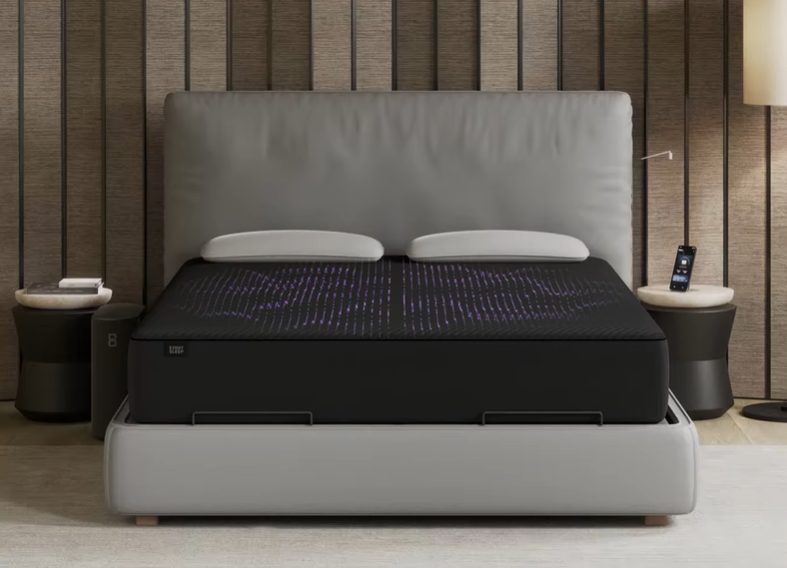
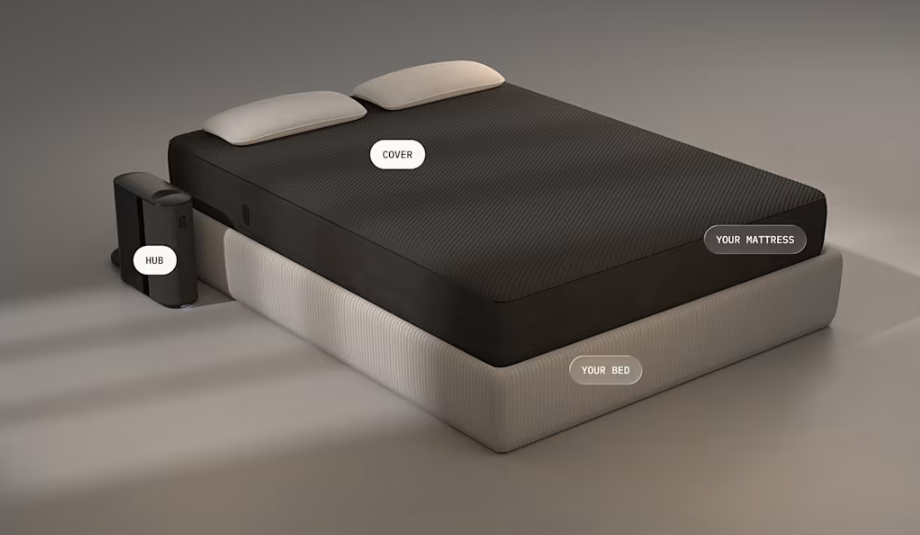
The Eight Sleep Pod 5 takes a different approach from a traditional smart bed because you don’t have to buy a new mattress. The Pod Cover sits on top of the mattress you already own, while the Hub connects the system and powers its temperature-control and tracking features.
The Cover can track metrics including heart rate, HRV, sleep phases, respiratory data, and snoring. It can also independently cool or heat each side of the bed, so you and your partner can use different temperature settings.
Eight Sleep currently lists the Pod 5 at around $3,000 before the cost of the membership, with a 30-night trial. Its standard warranty is two years, while five-year coverage is available with a qualifying membership plan.
That existing-mattress compatibility is the Pod’s biggest advantage. If you already have a mattress that you like, you don’t have to give it up just to add smart features. You’re essentially turning your existing bed into a smart sleep system.
Sleep Number Climate360
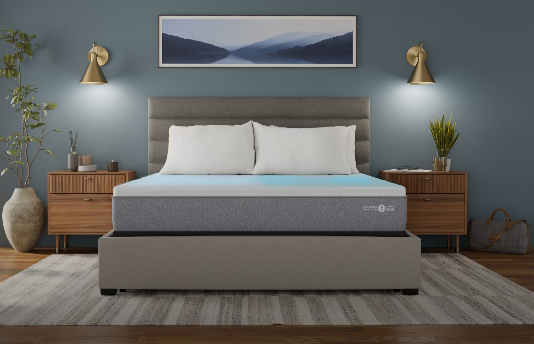
The Sleep Number Climate360 takes a more traditional smart-bed approach. Rather than adding technology to your existing mattress, you’re buying a complete Sleep Number system with adjustable firmness and temperature control. Like Eight Sleep, the Climate360 tracks HRV using its built-in full-body sensors.
The Climate360 is unique because Sleep Number’s core technology lets you adjust the firmness of each side of the bed independently. That can be useful for couples who have very different preferences for how firm or soft their mattress feels.
It also offers individualized temperature control, making it a direct competitor to the Pod for couples who want to control the temperature on their respective sides of the bed.
The tradeoff is that you’re committing to an entirely new mattress and bed system. If you already have a mattress you’re comfortable with, that makes the Climate360 a much bigger purchase than simply adding a Pod Cover.
It is currently listed at around $10,000, and offers a 100-night trial and 10-year limited warranty.
TEMPUR-ActiveBreeze
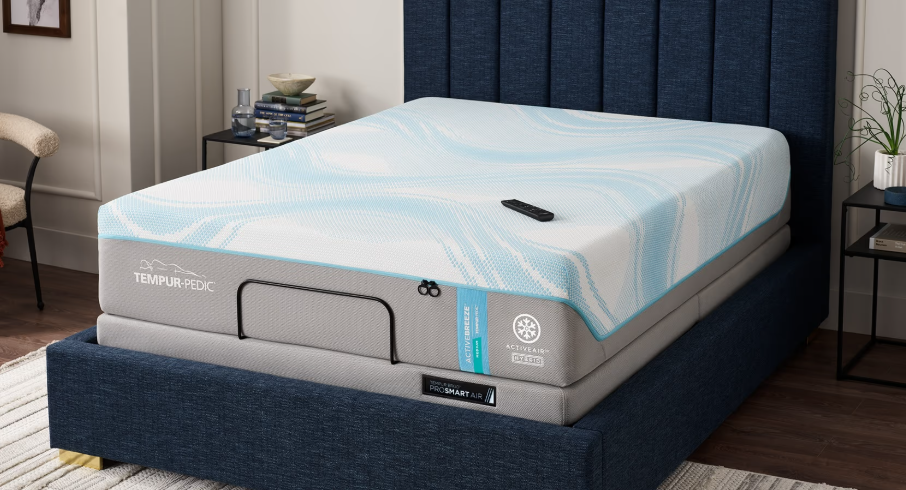
The TEMPUR-ActiveBreeze takes the full smart-bed concept even further. It’s a complete sleep system that combines a TEMPUR mattress with the TEMPUR-Ergo ProSmart Air Base.
Its biggest differentiator is climate control. The system uses an air-distribution layer in the mattress and fans in the base to circulate cool or warm air, with separate climate settings for each sleeper. It also includes features such as sleep tracking, automatic snore response, adjustable positioning, and relaxation programs.
Tempur-Pedic currently lists the Queen TEMPUR-ActiveBreeze system at roughly $10,000 before promotions, although prices can change. It comes with a 90-night trial and a 10-year limited warranty.
For someone who wants a luxury smart-bed system and doesn’t mind replacing their entire mattress and base, the ActiveBreeze offers a very comprehensive package. But you’re paying for considerably more than HRV tracking.
Best Smart Mattress for HRV Tracking: Eight Sleep Pod
For athletes and recovery-focused sleepers, HRV can be a useful metric, but only when you understand what it can and can’t tell you. It’s not a diagnosis, and it shouldn’t determine your training plan by itself. Instead, it’s most useful as part of a larger picture that includes sleep, training load, resting heart rate, fatigue, and how you actually feel.
If you don’t currently use recovery data and aren’t interested in changing how you train based on that information, an HRV-tracking mattress probably isn’t worth buying specifically for the HRV feature. But if you’re already paying attention to sleep, training load, and recovery, passive overnight tracking can give you another useful source of information without requiring you to wear a device to bed.
But which one should you choose? All three systems take a different approach.
The Sleep Number Climate360 is appealing if adjustable firmness is just as important to you as temperature control. The TEMPUR-ActiveBreeze makes the most sense if you want a luxury sleep system with advanced climate control and an adjustable base.
But for someone specifically looking for HRV tracking without giving up the mattress they already own, I think the Eight Sleep Pod 5 is the most compelling option. You still get overnight HRV and sleep tracking, along with active temperature regulation and other smart features, but you can keep the mattress you already love.
The Pod isn’t the cheapest smart sleep system, and its membership adds an ongoing cost, but it’s the most affordable of these options. Plus, compared to buying an entirely new smart bed, its ability to work with the mattress you already own is a significant advantage.
For athletes and recovery-focused sleepers, that’s ultimately what sets the Eight Sleep Pod apart. You’re not paying to replace a perfectly good mattress just to add smart technology. You’re adding the tracking and environmental controls you want to the sleep setup you already have. Its combination of passive HRV monitoring, sleep tracking, individualized temperature control, and other recovery-focused features makes it more than a way to measure your sleep; it gives you tools to improve it, too.