

- Do You Need to Be Certified to Work as a Personal Trainer? - October 22, 2026
- Best Indoor Cycling Certifications: Compare the Top Instructor Programs - August 20, 2026
A personal training career can be a great choice for people passionate about fitness and driven to help others. It’s a challenging, varied, social role, with the daily gratification of helping people improve their quality of life.
If you’re wondering what kind of training you need, you may be surprised to learn that, on a purely technical level, you don’t need any. Personal training is largely unregulated.
That said, there’s a big but. Just because you don’t legally require certification doesn’t mean you shouldn’t get qualified. You absolutely need to get yourself certified if you want a career in this field, and today, we’re exploring how and why.
The Legal Landscape Explored
In most countries worldwide, personal training is largely unregulated, and the United States is no different. There’s no rule that says you must complete an accredited course to act as, or be employed as, a personal trainer.
In practice, however, it doesn’t really work like that. While you might find the occasional gym that lets someone work without certification, that’s far from the norm. It’s also generally frowned upon, even if it’s technically legal.
This is the most fundamental aspect to understand about the legal situation surrounding personal training. While you aren’t required to be certified by law, it’s an unwritten rule that you should be, especially with employers, insurers, and potential clients. In other words, not being certified is a surefire way to make your career very difficult, if not non-existent. Let’s look at the main reasons to get certified in more detail.
Why You Should Get Certified
1. Most Gyms Expect It
Realistically, most gyms you interview for will ask about your qualifications right away, and that makes sense.
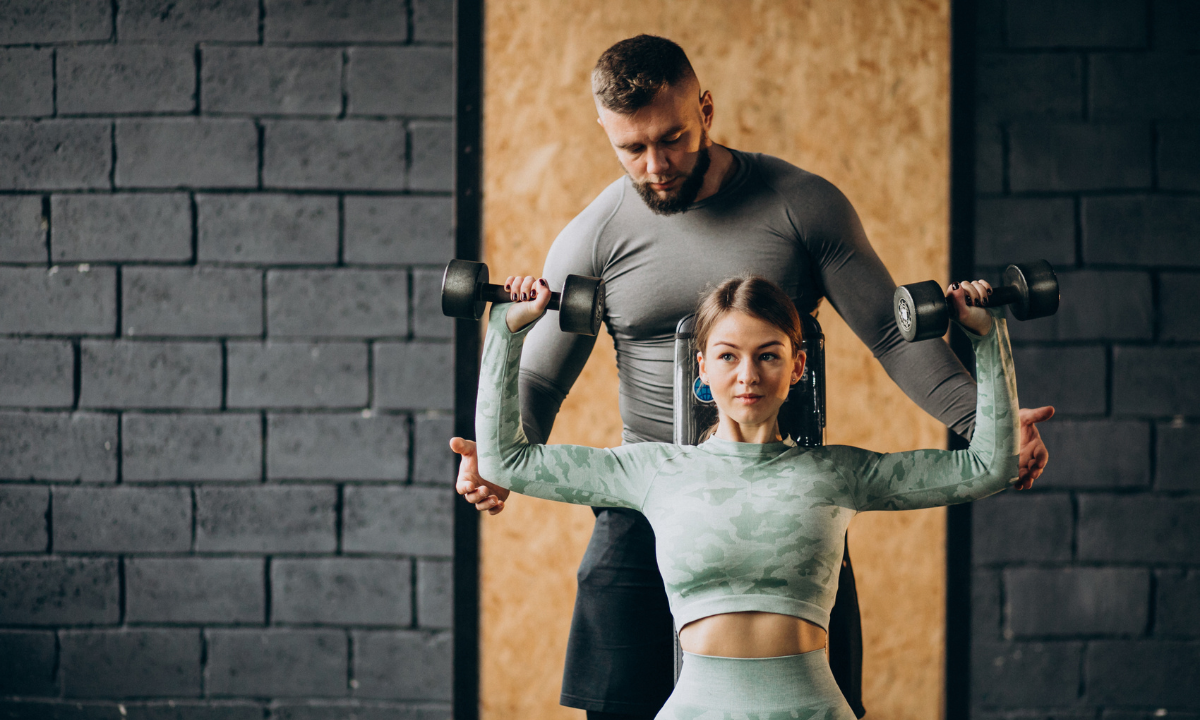
Becoming certified doesn’t guarantee you’re a great trainer, but it does ensure you’ve gained the knowledge to train a broad range of clients to a high standard. Fundamentally, an employer wants to know that you can deliver a high-quality service befitting the brand’s name, and that the gym’s members will be safe and well cared for under your supervision.
Without certification, the gym can’t verify this beyond what you say, and because a gym has a duty of care to its members, it’s a red flag if an employer hires a trainer without certification. Even from a practical perspective, a gym injury can lead to a lawsuit, and the gym could be partly responsible. This is especially problematic when a trainer without certification is involved, because they’re unlikely to secure their own liability insurance, which leads to the next point.
2. Most Insurers Require It
Insurance isn’t a legal requirement for personal trainers, but in practice, most trainers need it. Many gyms ask trainers to carry their own liability insurance, especially if they’re self-employed or bring in their own clients. Even if you work for a gym that covers you, you may want your own policy for clients you train elsewhere. And without insurance, you could be personally on the hook if a client gets hurt and makes a claim.
The catch is that getting insured usually means getting certified first. Let’s consider how insurers work at a basic level. They make money by collecting premiums and paying out as little as possible, so when they decide whether to cover someone, the bigger the risk, the less interested they are. A trainer without proper certification doesn’t make the cut.
Without a certification, insurers can’t verify that you know how to train clients safely, which makes it hard for them to judge how likely you are to cause an injury.
Most trainers take out a policy that includes both general liability and professional liability. Depending on what your day-to-day includes, you may need other types of coverage as well.
3. Your Clients Deserve It
A personal training certification reassures your clients. If anyone can call themselves a personal trainer, how can they be sure everything you’ve told them about your ability to help them is true? Why should they trust you? And why would they want to pay someone with no prior training?
Personal experience, including your own training and naturally acquired knowledge, shouldn’t be diminished, but it should never be your only claim to competency. You’d always want to know a dietitian has a post-graduate degree in dietetics, or that your GP is fully trained in medicine. Especially when someone’s health is at stake, you owe it to a client to prove you’ll provide safe, effective training, and that you’ve been properly trained to help them.
What Is a Personal Training Program Like?
As we’ll discuss shortly, personal training programs can differ in several key ways, but most share a similar structure and content.

What You’ll Study
All programs offer a core text or manual to follow, and all include a series of training modules covering various aspects of life in the role. These include, but are not limited to:
- Physiology
- Nutrition
- Programming
- Mindset and motivation
- Health and safety
- Business skills
You’ll usually complete one module at a time, but some programs are flexible in how they let you tackle the syllabus.
How You’re Assessed
You’ll be assessed for each module through coursework, and at the end of your course, you’ll complete both a practical assignment and an exam. Exactly how your final assessment is laid out can differ between courses.
Course Formats
There are a few ways to take the course:
- Online: Many people now choose one they can finish fully online, like ISSA’s personal trainer course, which is a popular choice. You can reach your tutor online for questions and grading, and you can usually take the final exam online too. For hands-on tests, like taking a client through a workout, you can often film yourself and upload the video instead of going in person.
- In person: You’d go to a set location and attend classes for a certain number of hours each week. In this model, you’d take the exam and the practical in person.
- Hybrid: Less common, this is where you complete some of the course in person and other parts online.
Once you complete the course and pass, you’ll be certified to work as a personal trainer nationwide.
What Do You Learn?
In terms of course content, here’s the key knowledge you’ll acquire during most programs:

Anatomy and Physiology
This topic forms the foundation of your understanding of how the body reacts and adapts to exercise. You’ll learn how the musculoskeletal system works to move the body through a variety of patterns, how the cardiovascular system handles aerobic and anaerobic activity, the fundamental processes that allow a client to get stronger, faster, and more efficient, and so on.
Nutrition
As the saying goes, you can’t out-exercise a bad diet, so good CPT courses cover the nutrition basics you need to support your clients outside the gym. You’ll learn about the three macronutrients and how they work (carbohydrates, fats, and protein), how energy balance relates to weight gain, weight loss, and maintenance, the importance of hydration and fueling the body for activity, as well as other core elements.
You won’t be able to create meal plans or prescribe specific diets, since that’s the job of a registered dietitian. What you can do is share general, evidence-based guidance, like encouraging balanced meals, enough protein, and staying hydrated.
Programming
As part of your course, you’ll learn how to take the knowledge you’ve learned in the anatomy and physiology part and apply it to client-specific programs.
This will include how to select relevant exercises and how to balance the program so that an appropriate intensity and volume (how much work is done) are set to allow for progression. Most programs also cover periodization, which explains how to fine-tune a routine over weeks or months to achieve a specific result.
Everything you learn here will be underpinned by established best practices and health and safety, so you can create programs that work and keep your clients safe.
Mindset and Behavior Change
Personal training is often as much about your people skills as it is about your technical knowledge, so your course will cover how to motivate clients by helping you understand the key elements of behavior change related to exercise.
You’ll also learn how to spot potential red flags that may warrant further assessment by another professional. Similarly to the nutrition component, you’ll work strictly within your remit here; you won’t be offering psychological strategy, but you need to understand how to recognize when someone needs help.
Business Skills
And finally, there’s the business side. You can work as a personal trainer in a few different ways, from working at a gym to running your own freelance business. Your course will cover things like how to market yourself, find your target market, set your prices, and win and keep clients.
Most courses don’t go into a lot of detail here, but what they cover will help you get started.
CPT vs. NCCA: Personal Trainer Certification Terms
If you’ve done any research so far, you’ll likely have come across a few confusing terms, from words that sound alike to several acronyms. These won’t necessarily have been explained wherever you read them. Let’s break them down, so you know exactly what you’re looking at when you start shopping around for a course.
Certificate vs. Certification
These two words sound alike, but they mean different things. A certificate shows you’ve completed a course or training program. A certification shows you’ve passed an exam proving you meet a set standard for a job. Certifications also usually need to be renewed every few years through continuing education.
When gyms and insurers ask if you’re qualified, they’re usually looking for a certification, like a CPT, not just a certificate of completion.
CPT (Certified Personal Trainer)
CPT is the most straightforward one. This simply stands for Certified Personal Trainer and is used to describe your professional status. Once certified, you can use CPT as a postnominal after your name.
NCCA (National Commission for Certifying Agencies)
NCCA is a little more complicated, but it’s important to understand when you’re choosing a course. It stands for National Commission for Certifying Agencies. The body accredits a wide variety of certification programs, ensuring they meet the recognized professional standards for that specific discipline. This doesn’t mean NCCA evaluates every element of the program; it’s more about a bird’s-eye view. As such, NCCA doesn’t directly accredit the course materials.
Not all certification programs are NCCA accredited, and it’s key to note that this doesn’t automatically mean they’re of poor quality. That said, some employers may prefer or require a candidate who has completed an NCCA-accredited course.
Some course providers offer both accredited and non-accredited exams. ISSA, the course provider mentioned earlier, includes its own open-book exam as well as access to a separate, NCCA-accredited exam called the NCCPT-CPT (closed-book). Each exam leads to a different credential, even though both come from the same provider.
Popular Personal Trainer Certifications
There are lots of personal trainer certifications out there, and many of the course providers go by acronyms, which can make them hard to tell apart at first. While they all aim to prepare you for the same role, each one has its own focus, study format, and exam options. Some are better known among gyms, while others stand out for flexibility or a specific teaching style.
Here are some of the most popular ones you’ll come across:
- ISSA (International Sports Sciences Association): Known for its fully online course and flexible study options. It offers both its own exam and an NCCA-accredited exam.
- NASM (National Academy of Sports Medicine): One of the best-known names in the industry, with an NCCA-accredited certification that many gyms recognize.
- ACE (American Council on Exercise): A nonprofit offering an NCCA-accredited certification, often chosen by trainers who want a strong focus on behavior change and client coaching.
- NCSF (National Council on Strength and Fitness): Offers an NCCA-accredited certification with a strong focus on exercise science.
- IPTA (International Personal Trainer Academy): A newer, fully online provider with an NCCA-accredited certification, known for being one of the more affordable options.
Which Course is Right for You?
When choosing the right course, there are several factors to consider.

1. Budget
What can you afford? And which ones offer payment plans to make the cost more manageable? Most CPT courses are priced similarly, but some, such as the ISSA-CPT program, allow you to spread the cost over 12 monthly payments at zero percent interest.
2. NCCA Accreditation
Consider whether you want a course that’s NCCA-accredited. If you’re planning to work at a specific gym, find out what they require before choosing a course. If you want to cover all bases and not have to worry about this, choose the NCCA route.
3. Course Delivery Method
If you have a busy schedule or don’t want to travel far for in-person tuition or exams, a fully online course is the clear way to go. If you’re someone who lives within a reasonable distance to a teaching center and prefers to learn face-to-face (or as part of a hybrid approach), the in-person approach may work better for you.
4. Provider Reputation
Finally, look into the provider’s reputation before you sign up. Check whether gyms in your area recognize the certification, read reviews from past students, and see how long the provider has been around. It’s also worth looking at what support they offer, like study materials, exam retakes, and help with continuing education once you’re certified. All five providers listed above are well-established options to start with.
Will a Degree Help You On Your Journey?
If you have a degree in a related field, such as sports science, it can certainly bolster your application and give you a strong talking point in an interview. That said, it won’t replace a dedicated personal training qualification.
It’s easy to assume a degree supersedes a personal training qualification, or that you don’t need one, but your degree doesn’t mean you have the specific skills required to be a good trainer. Theoretical knowledge isn’t everything; alongside the science, you’ll also learn how to teach effectively and treat clients with compassion and understanding, helping motivate them through each challenge they face.
Certification is Your Gateway to a Prosperous Career
Although you can technically work as a personal trainer without first getting certified, this article has hopefully shown why that isn’t recommended.
Proper certification through a reputable provider gives you not only an important piece of paper, but also the skills you need to serve your clients. It’s the foundation for a fulfilling career.
Good luck on your journey!