


- ISSA CPT Exam Explained - November 26, 2026
- Do You Need to Be Certified to Work as a Personal Trainer? - October 22, 2026
- Best Indoor Cycling Certifications: Compare the Top Instructor Programs - August 20, 2026
If you’re considering enrolling in ISSA’s personal training course, you’ve probably come across the two examination options: the ISSA CPT and the NCCPT-CPT(National Council for Certified Personal Trainers), the latter of which is accredited by the NCCA (National Commission for Certifying Agencies). You have access to both of these exams after purchasing your course. You only need to choose one, so what’s the difference between the two? And which one should you pick?
Understanding how these final exams differ is key to getting the most out of your course, but it’s easy to get confused, and I’ve been there. As an instructor and personal trainer, I’ve completed a variety of different courses across a range of fitness subjects, so I’ve navigated the certification-to-employment pipeline several times. Let’s look at how each of these exams works, what you need to prepare, and the benefits of choosing one over the other.
Both Exams in a Nutshell

Here’s a quick table to summarise before we get into the details.
| Exam | Fees | Passing Score | Open/Closed Book | Number of Questions | Type | Main advantage |
| ISSA CPT | Included in course fee | 70% | Open book | Up to 200 | Multiple-choice with a case study | Maximum employability, as many big gyms require NCCA certification. |
| NCCPT-CPT | $79 proctoring fee | Not published – proprietary scaling system | Closed book | 140 (125 marked, 15 pretest) | Multiple-choice | Lower-stress exam with no extra payment required. |
The ISSA CPT Exam
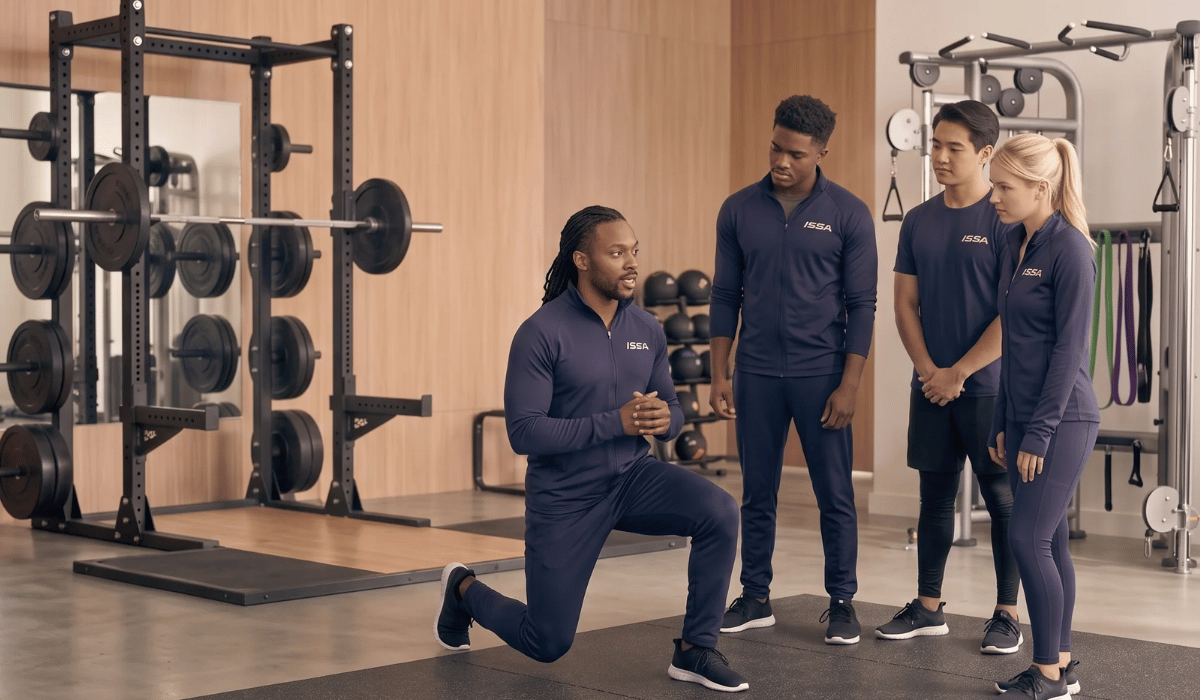
The NCCA doesn’t accredit the ISSA CPT (Certified Personal Trainer) exam, and it’s open book, meaning you’ll have access to your course material to refer back to. It’s multiple choice, and you’ll also be required to complete a practical case study. Here, you’ll demonstrate your knowledge by answering questions relating to a hypothetical client.
The exam contains 160-200 questions in total, no time limit, and you won’t need to book the exam in advance. The passing score is 70%, and you’ll need to pass each module quiz and have your CPR/AED certificate to take it. You don’t technically need it before the exam, but you’ll need it to earn your certification, so it’s best to do it beforehand.
It’s important to note that open book exams aren’t simply about copying answers from a text; you’re using the resources provided to demonstrate your knowledge of the subject. While some questions might be reasonably simple to answer, others require deeper interpretation beyond just reading the answer from the course material and clicking the right box. The idea is that the better you know the course material, the less you’ll need to rely on it, and the inverse is also true. Even with the text in front of you, you’d struggle to find what you need to answer the questions if you didn’t already understand the material well.
The biggest benefit of this exam is that there’s less pressure. Being the sort of person who’s good at memorizing and performs well under timed conditions doesn’t necessarily mean you’ll be a better personal trainer than someone without those qualities, and the ISSA CPT accounts for those differences in learning.
The NCCPT-CPT Exam
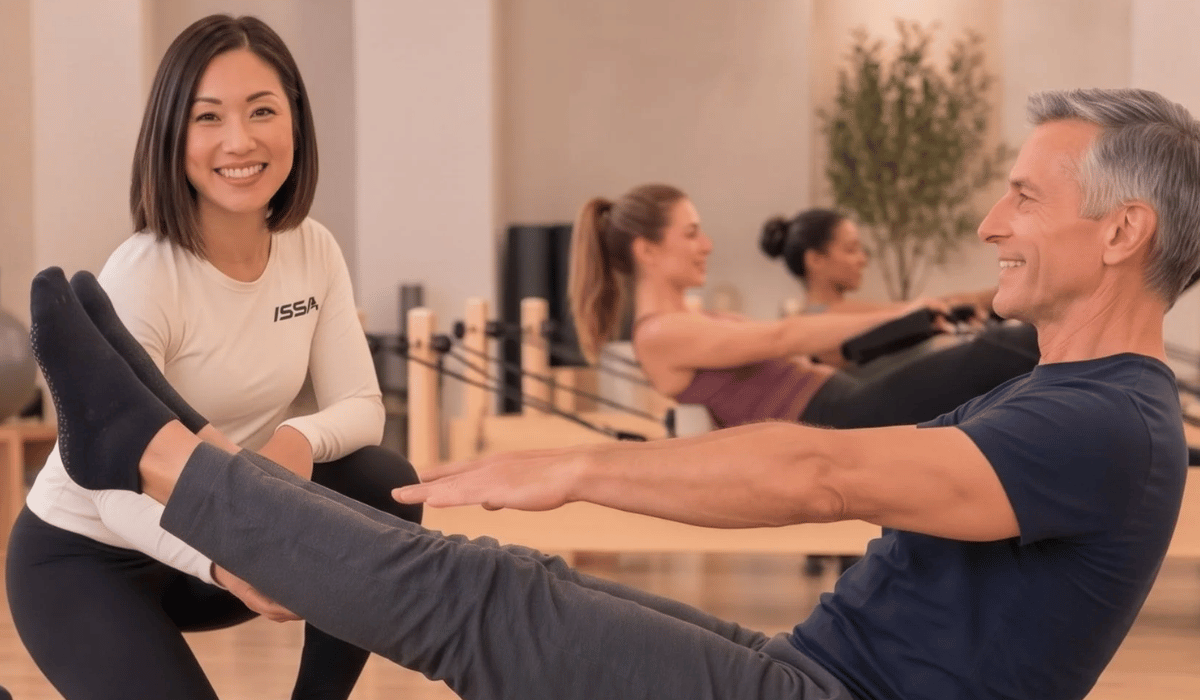
The NCCPT-CPT exam is unique in how it’s accredited by the NCCA.
The NCCA is an independent body that evaluates certification programs against strict criteria based on evolving industry standards. Some employers prefer candidates to have taken an NCCA-accredited exam, as it gives them peace of mind that the candidate meets the industry’s consensus for what makes a competent personal trainer. The NCCPT certification organization acts as a subsidiary of ISSA and administers the NCCPT-CPT certification program.
This assessment is closed-book, meaning you won’t have access to your course material to help you answer the questions. It’s multiple-choice, and you’ll have two hours to finish it. While ISSA’s personal training course is taken entirely online, you can take the NCCA-accredited exam in person at an official Prometric testing center or complete it online (with online proctoring).
You’ll need to answer 140 questions in total. 15 of these are pretest questions, meaning you’ll actually be marked on 125. Pretest questions are used to evaluate potential questions for future exams, and you won’t be told which are pretest questions and which are marked (so from your perspective, it doesn’t make any difference).
NCCPT doesn’t publish the passing score because it uses a proprietary scaling system to calculate your result. Because the exam questions change over time, meaning that there can be slight differences in difficulty, the scaling system adjusts your raw score to balance differences from exam to exam.
It’s also worth mentioning that while the NCCPT-CPT exam is included in your course, you’ll still need to pay an extra $79 proctoring fee, and like the ISSA CPT, you’ll need valid CPR certification to take it. You’ll have twelve months from the purchase date to take your exam, and if required, this can be extended a further six months for free.
Completing the NCCPT-CPT is essentially covering all bases. It means that when an employer is stricter and wants extra assurance, you’ve got what you need.
How Each Exam Affects Employability
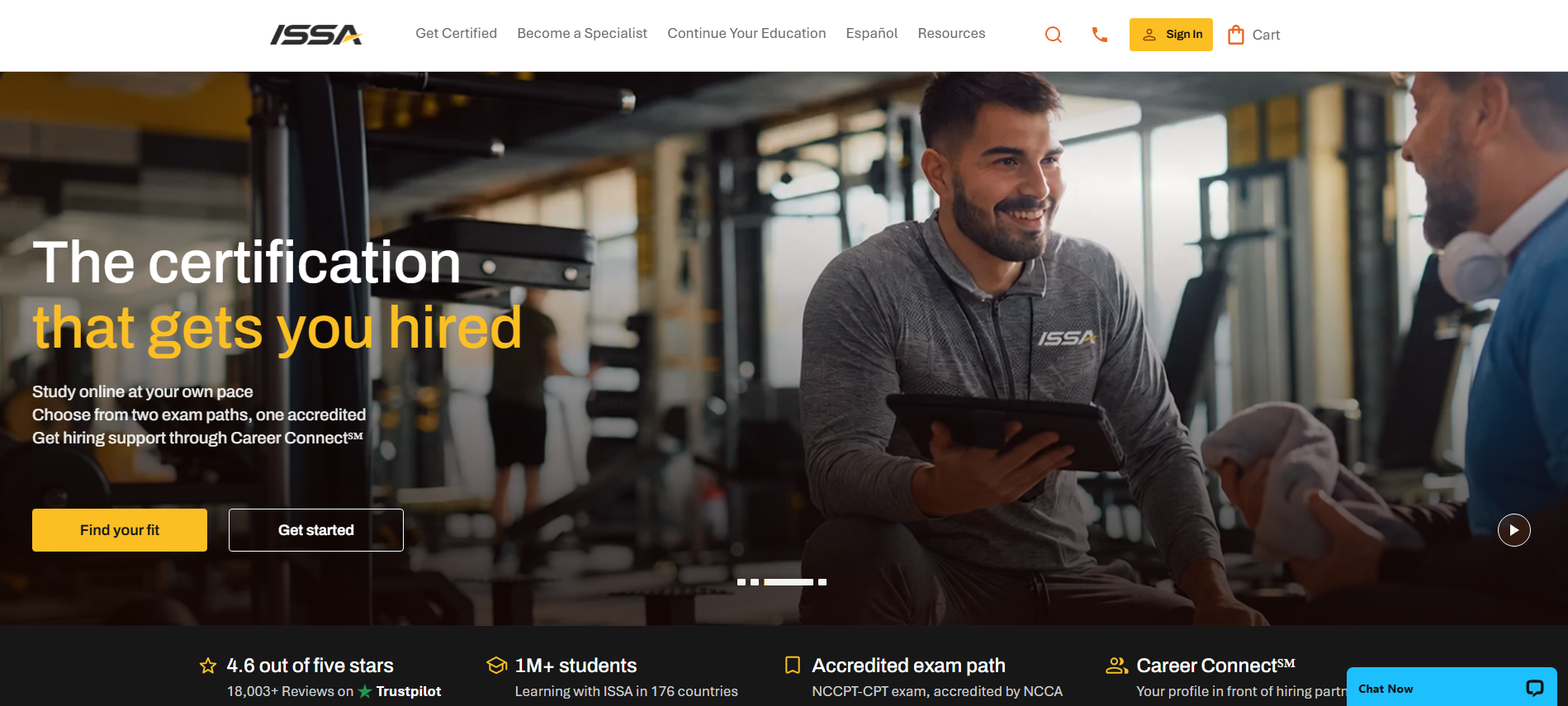
Now that you’re clear on the core differences between the exams, let’s explore the topic of NCCA accreditation and employability in more detail, as this is going to be the primary determining factor for why you’d choose one exam over the other.
If you want to work in a gym as a personal trainer, you have a few different options. The first is to work in a popular commercial gym. Many (though not all) of these gyms will require trainers to have passed an NCCA-accredited exam. Then, you have private gyms. You’ll find more variation here in what employers look for: some will require NCCA accreditation, while others simply insist you hold a nationally recognized personal training qualification as an equivalent (such as the ISSA CPT). Finally, you’ve got locally-run fitness and leisure centers, and again, this will be somewhat of a mixed bag in terms of what the employers are looking for.
If you already have a clear idea of where you want to work, and it doesn’t require NCCA accreditation, you can take the ISSA CPT with confidence. The NCCPT-CPT, on the other hand, allows you to cast a wide net, which is most helpful if you’re applying to lots of different places at once and want to maximize your chances.
There are other things to consider, too. For example, if you complete the NCCPT-CPT exam, you’ll also qualify for ISSA’s 100% money-back job guarantee. You can read more about that here, but in a nutshell, you’ll get a full refund if you meet the requirements and don’t secure a job within six months. These requirements tie directly into Career Connect, an online platform designed to make getting hired easier. It helps you build a professional profile and connect with ISSA’s network of over 23,000 gym partners such as Anytime Fitness, 24 Hour Fitness, and Equinox. While the guarantee is only for those who have completed the NCCPT-CPT exam, Career Connect is still available as a resource for ISSA CPT candidates. Systems like these don’t mean you’ll definitely land a job, but no matter which exam you choose, you at least have a helping hand.
One key thing to remember: NCCA accreditation applies to the certification program, not the course material or the provider. It’s the certification process itself that’s being scrutinized, so your modules – as well as how they’re delivered and taught – do not change. This also goes for how each module is assessed in isolation.
Frequently Asked Questions
By now, you should have a good idea of how the NCCPT-CPT differs from the ISSA CPT. To help you solidify your decision, here are the answers to a few frequently asked questions.
1. Will NCCA accreditation appeal to potential clients?
No, your clients are unlikely to know the difference between an NCCA-accredited course and one that isn’t. Occasionally, you might run into clients who are aware, but these will be few and far between. Most people just want assurance that the trainer they choose is certified, and passing either exam qualifies you.
2. How much harder is the NCCPT-CPT exam compared to the ISSA CPT exam?
The main difference in difficulty is that the NCCPT-CPT exam is closed-book. Not having your course material to refer to means you’ll need to rely entirely on your memory. If you find that you can easily remember what you’ve learned on the spot, then this isn’t necessarily an issue, but it’s always going to be easier to have help.
The timed element also adds pressure. Some people will find that they have plenty of time, but for others, it may be limiting. It depends entirely on how you work, so think back to how you performed on other exams under similar conditions, such as in school or college, for a sense of what to expect.
3. Does the course change depending on which exam I choose?
No, both exams test your knowledge on the same material. Many people mistakenly think choosing one or the other changes the course itself, but your experience stays the same until the end. That means the same course material and the same assessments at the end of each module.
4. Can I take both exams?
You can, but there’s little reason to. If you’ve taken the NCCPT-CPT, you’ve already qualified under the stricter exam conditions that offer maximum benefit, so there would be no reason to take the ISSA CPT from here.
If you want to warm up to the NCCPT-CPT, you could take the ISSA CPT beforehand to help you prepare, but most people choose one and focus their energy there. You can also take the ISSA CPT, see how you fare employment-wise, and then take the NCCPT-CPT later if you feel you need it.
5. What happens if I fail either exam?
Failing the exam doesn’t mean you fail the course or that your studies have been for nothing. With the NCCPT-CPT, you can retake the test. You’ll need to wait a full 14 days after your initial attempt before retaking, 90 days after your 2nd attempt, and a year after your 3rd (a maximum of 3 exam attempts within a 12-month period). You’ll also need to pay a $99 fee for each retake as well as the $79 proctoring fee.
If you’re retaking the ISSA CPT exam, you get two attempts right out of the gate (meaning your 2nd attempt is free), and there’s no waiting period enforced between retakes. If you failed the 2nd attempt, then you’ll pay $99 for each subsequent attempt after that.
6. Do I need to renew my certification?
Yes. With both the ISSA CPT and the NCCPT-CPT exam, you’ll need to renew the certification every two years. ISSA CPT renewal costs $99, and NCCPT-CPT renewal costs $75.
You won’t need to complete the exam again to renew, however. Instead, you’ll complete a series of Continuing Education Units (CEUs), which can comprise a mix of workshops, courses, and other such educational pursuits. You’ll also need an up-to-date CPR or CPR/AED certification, and if you complete your CEUs directly with ISSA, the above fees may be waived.
Determining Whether the ISSA CPT or NCCPT-CPT Exam is Right for You
If you envisage working in a system that doesn’t warrant accreditation, you may want to skip the fee and extra pressure and go with ISSA’s CPT (with the added benefit of Career Connect).
When it comes to the NCCPT-CPT, the most important thing to consider is whether NCCA accreditation will benefit your specific employment prospects. A surefire way to kickstart a personal training career is to start in a commercial gym, as you’ll gain the experience you need in a varied environment with a high volume of clients. Many of these gyms require NCCA accreditation from prospective employees, so you’re certainly opening more doors by taking this exam.
Both exams are worthwhile options for starting your personal training career with your best foot forward, but hopefully, you’re now a little clearer on how ISSA’s examination process works and how the two pathways differ. Good luck on your journey!