


- Where Do Most Personal Trainers Get Their CEUs? - July 14, 2026
Where do you actually get your CEUs?
An internet search can bring up an overwhelming number of providers, certifications, specializations, and continuing education courses, and it doesn’t take long before everything starts to blend together.
Some certifying organizations offer their own continuing education, while others focus only on CEUs. You can take live or online courses, which are less time-restrictive. There are also providers who specialize in one area of fitness, such as nutrition, women-specific, or corrective exercise, to name a few.
Let’s talk about available options for earning CEUs and what to consider before choosing a CEU provider.
What Are CEUs?

Continuing education units (CEUs) are part of maintaining your personal training certification. They give trainers the opportunity to continue learning, build new skills, and stay engaged in their profession throughout their careers.
For many trainers, earning CEUs becomes part of a regular recertification cycle. Instead of simply renewing a certification, continuing education allows you to expand your knowledge in areas that interest you or support the clients you work with.
Before enrolling in any course, it’s important to understand your certifying organization’s requirements, such as how many CEUs are required to maintain your certification and how many CEUs you will receive if you choose to take a course outside your organization.
Every organization establishes its own policies, so it’s worth reviewing those requirements before purchasing a course.
So, Where Do Most Trainers Get Their CEUs?
Most continuing education falls into three general categories:
- Courses offered by a trainer’s certifying organization
- Dedicated CEU providers
- Category-specific education providers
Many trainers use a combination of these throughout their careers depending on what their goals are.
For example; as a trainer, some of my clientele consisted of adults over the age of 60 with mobility and other health issues. Which is why I sought out a CEU that focused on training this age group.
I did go outside my certifying organization for this class, but before doing so I made sure to check how many CEUs I would receive once the course was completed.
Option 1: Your Certifying Organization
There are a few reasons many trainers stay with their certifying organization for continuing education.
- The process is familiar.
- The education is designed for that organization’s certified professionals.
- In some cases, you also have the opportunity to earn an additional specialization instead of only completing CEUs.
There are several certifying organizations that offer their own continuing education opportunities, including ISSA, NASM, and ACE:
ISSA
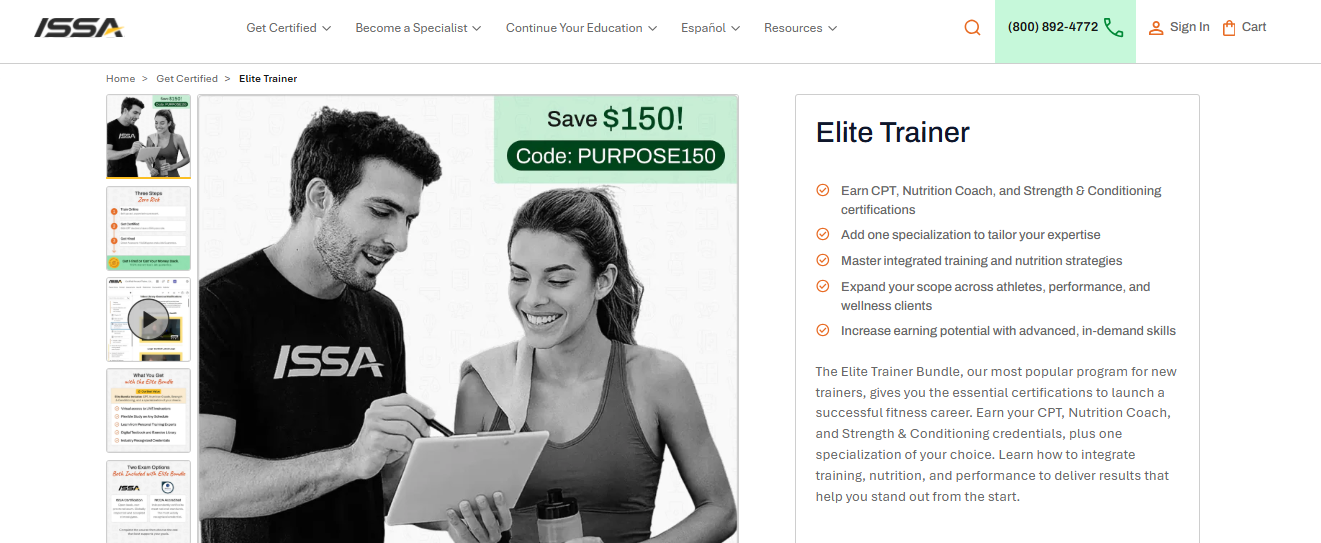
ISSA offers a variety of specializations that can help trainers continue their education, such as;
- Elite Trainer
- Master Trainer
- Fitness Coach
- Nutrition Coach
- Certified Pilates Instructor
- Yoga 200 Certification
If you already hold an ISSA certification, these specializations count toward ISSA recertification and add another credential to your resume. Instead of earning CEU credit alone, you will finish the course with an additional specialization.
If you are an ISSA-certified trainer, this combination makes sense because it supports recertification and expands your credentials.
If you are certified through another organization, an ISSA specialization may still be an appealing way to gain additional education and earn another credential. You should always check with your certifying organization to confirm whether ISSA education qualifies for CEU credit before enrolling.
NASM
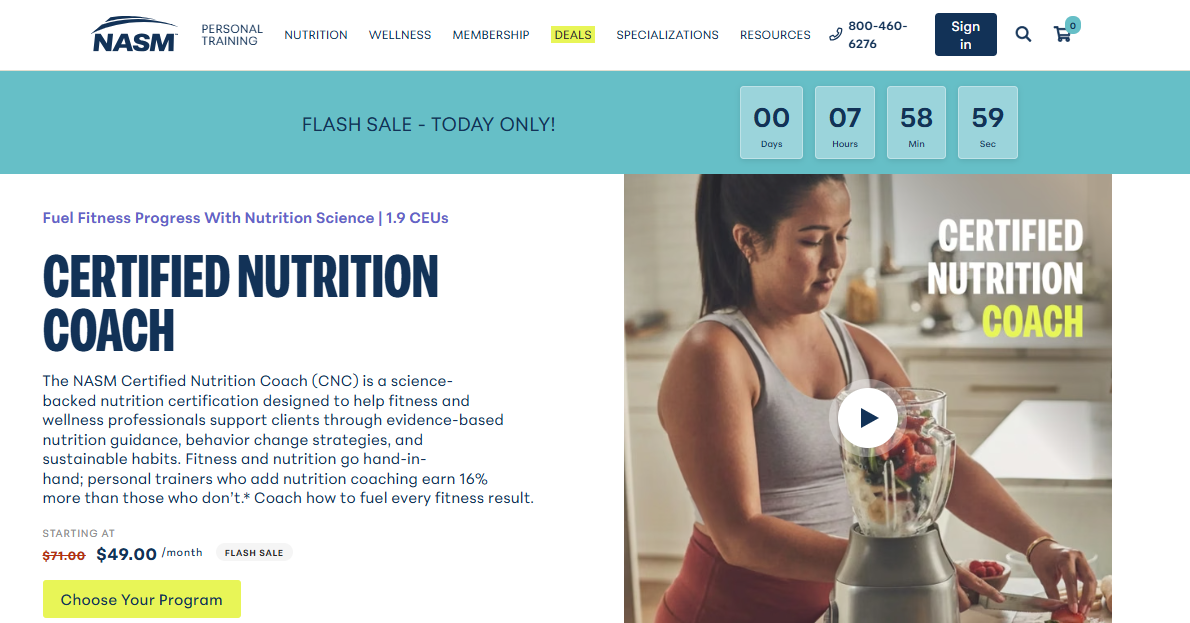
NASM also offers more than 50 continuing education opportunities for certified trainers on a variety of topics, including;
- Business & Coaching
- Active Aging
- Nutrition & Weight Management
- Fitness & Performance
- Stretching & Recovery
- Mental Health & Mindset
These courses are shorter than those ISSA offers and are specific to continuing education rather than a credential or specialization. NASM CUEs allow you to continue learning while working toward your recertification requirements.
ACE
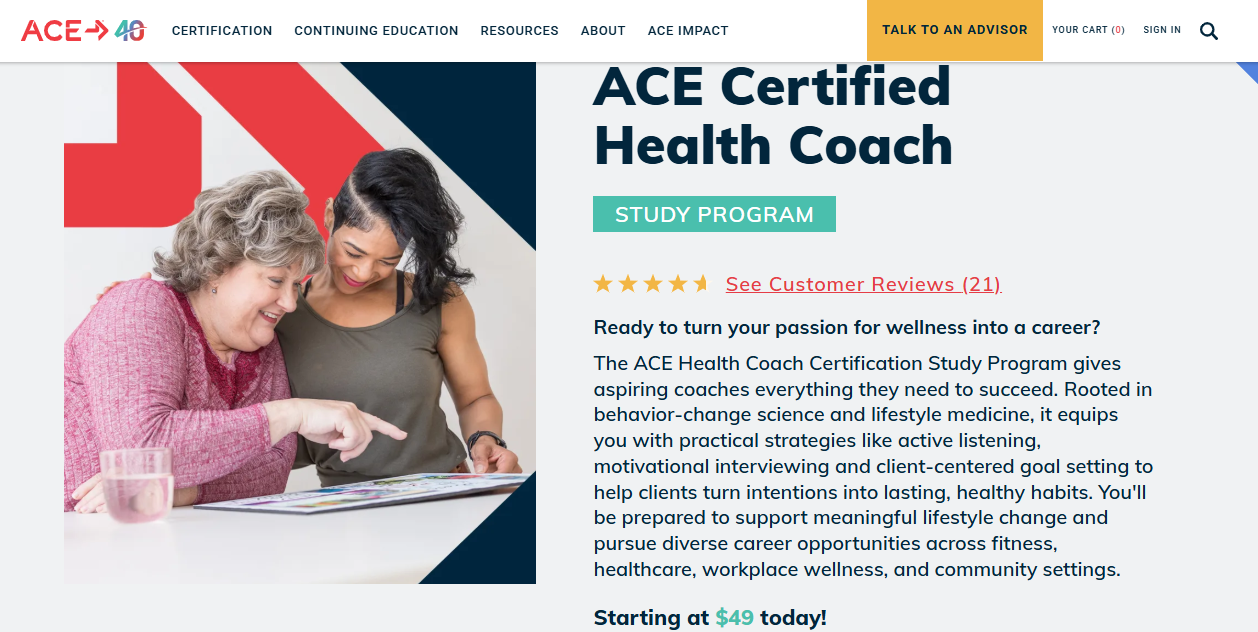
ACE provides similar continuing education options as ISSA and NASM as part of its professional development pathway. In addition to the areas of expertise mentioned above, ACE also offers courses in;
- Cardiovascular Health
- Behavior
- Advocacy
- Disease
- Equality, Diversity, Inclusion
- Program Design
- Women’s Health
- Youth
No matter which organization you choose, you will find education that aligns with your interests and career goals as you work toward recertification.
Option 2: Dedicated CEU Providers

It is important to remember that not every continuing education provider is also a certifying organization.
Some organizations focus primarily on continuing education for fitness professionals. Their goal is to provide courses that help you continue learning throughout your career.
Oftentimes, dedicated CEU providers offer a wide variety of topics, allowing you to choose education based on your interests or the populations you work with.
Brookbush Institute is an example of such an organization.
Brookbush offers classes, videos, and articles in addition to specific certifications. They also offer live events and webinars.
You may appreciate having additional options outside your certifying organization, especially if you’re looking for education in a specific area.
When considering a dedicated CEU provider, it’s still important to confirm that the course meets your certifying organization’s requirements before purchasing it. Many organizations, such as FixFitNow, will list approved provider organizations on their website.
Option 3: Category-Specific Education Providers

Another common option is education that focuses on a specific area of expertise. Instead of offering broad continuing education, these providers specialize in one topic.
For example, you may want to pursue education related to:
- Strength and conditioning
- Corrective exercise and movement
- Nutrition and behavior change
- Women’s fitness
- Sports performance
This type of education often appeals to trainers who already know the direction they want to take their careers.
For example, when I worked at a women’s-specific gym, my continuing education focus was to learn as much as possible on the ins and outs of training all ages of female clients.
Someone interested in working primarily with seniors may decide to pursue additional education focused on aging. If you are a youth sports coach, you may want to focus on youth developmental stages.
Why Choose An Additional Credential
Continuing education isn’t only about checking a box for recertification. Some trainers look for education that also adds another credential to their professional background.
If you are an ISSA-certified trainer, specializations can serve both purposes by contributing to ISSA recertification and adding another credential.
If you are certified through another organization, an ISSA specialization may still be worth considering if your goal is to gain additional education and another credential. If CEU credit is important, you should always remember to verify acceptance with your certifying organization before enrolling.
Every trainer’s priorities are different. Some focus on earning the required CEUs as efficiently as possible, while others look for education that supports long-term career growth.
How Do You Choose the Right CEU Provider?

With so many options available, it helps to start with a few simple guidelines.
- Review your certifying organization’s recertification requirements.
- Think about what you want from the course. Are you simply looking to complete your CEUs, or do you want to build knowledge in a specific area?
- You may also want to consider whether the course provides an additional credential, especially if you’re trying to build a specialty or expand your services.
No matter which provider you choose, it’s always a good idea to verify that the education meets your certifying organization’s requirements before enrolling.
Common Mistakes During Your First CEU Cycle
Many trainers go through the same learning process during their first recertification cycle. Some wait until the last minute before looking for a course. I will admit, this was me on more than one occasion.
Others choose a course without first checking whether it meets their certifying organization’s requirements. Some focus only on earning enough CEUs rather than considering how the education might support their long-term career goals.
Setting a reminder on your calendar and taking a little time to research your options will help you be prepared to complete continuing education that serves your clientele and business.
How to Get Started
You can stay with your certifying organization, use dedicated CEU providers, or pursue education from organizations that specialize in a particular area of fitness. The best part is that you can also use a combination of all three throughout your career.
If you’re ISSA-certified, ISSA specializations offer a way to work toward recertification while earning another credential. If you’re certified through another organization, those specializations may still be worth considering as a credential-first option, but it’s important to verify whether they’ll count toward your CEU requirements before enrolling.
Ultimately, the best continuing education is the education that supports both your recertification requirements and your long-term professional goals.