

- Is the Eight Sleep Pod 6 Worth It? My Experience and What to Know Before Buying - October 26, 2026
- Best Vendors for Custom Athletic Shorts for Teams and Gyms - October 5, 2026
- Best Beds for Biohackers: 4 Sleep Systems I’d Put in a Recovery Stack - August 22, 2026
I’ve spent a lot of my adult life thinking about health. Years of chronic migraines and neck pain will do that to you. I’ve experimented with food, supplements, and exercise, and become very familiar with how small changes can show up in how I feel. Through all of it, sleep has stayed near the top of my list.
If I had to rank the boring basics, diet would probably come first, and sleep would be right behind it. I’ve always thought of sleep as the part of the day when I give my body the best chance to repair and recover, and realistically, we spend roughly a third of our lives in bed. I have a hard time justifying an expensive wellness gadget I might use for 15 minutes a few times a week while ignoring the place I spend seven or eight hours every night.
For a biohacker, a bed can do quite a bit more than feel comfortable. Newer sleep systems can change temperature, track biometrics without another wearable, adjust firmness or pressure, respond to snoring, and build a record of what is happening night after night. But I’m less interested in how many features a bed can advertise than whether they help me sleep better, recover better, or learn something I can act on.
At a Glance
| Bed or Sleep System | Best For | Why It Made My List |
|---|---|---|
| Eight Sleep Pod 5 | Enhancing existing mattresses | Active temperature regulation and non-wearable biometric tracking while keeping a mattress you already like |
| Sleep Number Climate360 | Couples who want different firmness and temperature settings | Independent firmness and temperature control on each side |
| Bryte Balance Pro | Adaptive pressure and support | Real-time pressure relief, zoned firmness adjustments, and sleep tracking without a wearable |
| Avocado Green Mattress | Materials-conscious biohackers | Certified organic materials, long warranty coverage, and an easy base for adding sleep technology separately |
What I Want a Biohacking Bed to Do
I don’t think the smartest bed is necessarily the one that measures the most things. A sleep tracker can tell me that my resting heart rate was higher or my HRV was lower, but I still have to figure out why, and piling another score onto my morning does not automatically make the information actionable. A bed that notices patterns and then changes the sleep environment has a more direct role in the process, which is a big reason active temperature regulation interests me more than simply collecting more data.
Temperature has more research behind it than I expected when I first started looking into this category. A 2024 three-center study in Scientific Reports followed 72 adults sleeping on both a high-heat-capacity cooling mattress and a regular memory-foam mattress. The cooling mattress increased N3 slow-wave sleep by an average of about 7.5 minutes over a 7.5-hour sleep period, which the researchers described as roughly a 10% increase in total N3 sleep. It also lowered sleeping heart rate by a little over two beats per minute. The researchers tied those changes to conductive heat loss through the mattress, which makes the temperature part of this conversation a lot more interesting than the usual “cool to the touch” language on a mattress box.
Biometric data can still be worthwhile, especially when I can look at trends over several weeks instead of getting hung up on a single night. Resting heart rate, HRV, respiratory rate, sleep duration, and consistency tell me more than an exact estimate of how many minutes of REM I got on Tuesday.
Then there are the boring questions that become much less boring after spending several thousand dollars. Before buying, I want to know how long the warranty lasts, whether there is a subscription, and whether one failed component means replacing that piece or the entire bed. Biohacking tends to pull attention toward whatever is newest, but a bed is one purchase where I want the ownership questions answered before I get excited about the dashboard.
Eight Sleep Pod 5: The One I’d Choose First
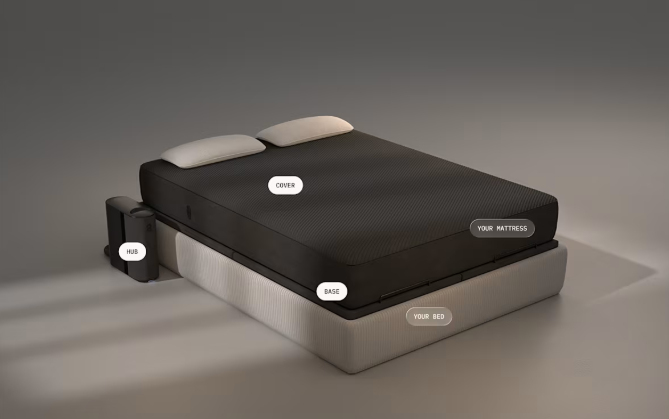
Eight Sleep works especially well for this kind of buyer because the Pod 5 does not force you to choose a new mattress. The cover goes over the mattress you already own, while the Hub circulates water through the system for active heating and cooling. Each side has independent temperature control from 55°F to 110°F, and the system tracks heart rate, HRV, sleep phases, and snoring while Autopilot can adjust the sleep environment based on your patterns and conditions.
Keeping the mattress separate from the technology is a bigger advantage for me than another feature on a spec sheet. With my neck pain, I know how quickly one small change in support can become irritating, and once I find a mattress that my shoulders, neck, and back all agree with, I’m not eager to replace it. Eight Sleep lets the mattress keep doing the physical support job while the cover handles temperature and tracking.
The temperature control is active rather than relying on gel, breathable foam, or another material that feels cool when you first get into bed and then warms up underneath you. I’m picky about heat because once I notice that I’m warm, I’m awake enough to be irritated by it, and then I’m moving pillows around, sticking a foot out from under the blanket, and lying there thinking about how badly I need to fall asleep.
There is direct research on the Eight Sleep Pod, although the results deserve some context. A 2024 study followed 54 adults using the Pod with temperature control on and off. Overall, sleeping heart rate fell by about 2%, and HRV increased by about 7% with the Pod on, while sleep-stage changes differed by sex and temperature setting: men sleeping cooler in the first half of the night gained deep sleep, while women sleeping cooler gained REM sleep. The research team was primarily affiliated with Eight Sleep, so I see it as encouraging company-connected research rather than proof that every sleeper will get the same result.
The optional base adds elevation and can raise the sleeper’s head when snoring is detected, while Eight Sleep offers a temperature-controlled blanket and pillow cover. For me, the cover is the place to start, with add-ons only if there is a specific problem to solve.
Autopilot belongs in the cost calculation too. It is required for the first 12 months and billed annually, although it can be canceled after that first year. Since the membership includes much of the Pod’s dynamic temperature and tracking functionality, I’d compare the hardware price, membership, and warranty together rather than treating the subscription as an afterthought.
The other concern is Eight Sleep’s history with leaks. Pod 3 and earlier models developed a reputation for them, and Eight Sleep redesigned the thermal system for newer generations, moving away from the older grid layout to softer tubing arranged in separate paths. Eight Sleep says the newer design reduces stress points and that automatic daily priming helps reduce pressure buildup. Current Pods carry a standard two-year limited warranty, with qualifying Autopilot Enhanced or Elite plans extending limited coverage to five years.
Water circulating through something I sleep on every night is still enough reason for me to read the warranty carefully, but the current design is not the same construction that created much of the older reputation. Even with that history in mind, this is the system I’d start with if the goal were to make temperature and sleep data a meaningful part of a recovery stack.
Sleep Number Climate360: When Support Needs to Change Too
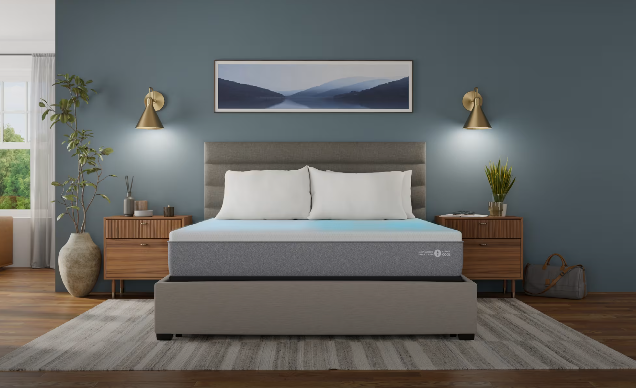
Eight Sleep is easier to justify when you already know what kind of mattress you like, while Sleep Number’s Climate360 takes a more integrated approach because the mattress itself is part of the technology. Each sleeper can set the firmness on their side independently, and the Climate360 actively cools and warms both sides of the bed based on individual preferences.
My hesitation is the same reason some people will love it: everything is integrated. If I already had a mattress that worked well for my neck and back, replacing the whole thing to get climate control would feel unnecessary. If I were starting from zero and shopping for a mattress anyway, especially for two people with very different comfort preferences, Climate360 becomes much easier to put on the shortlist.
Bryte Balance Pro: For Pressure and Support Tinkerers
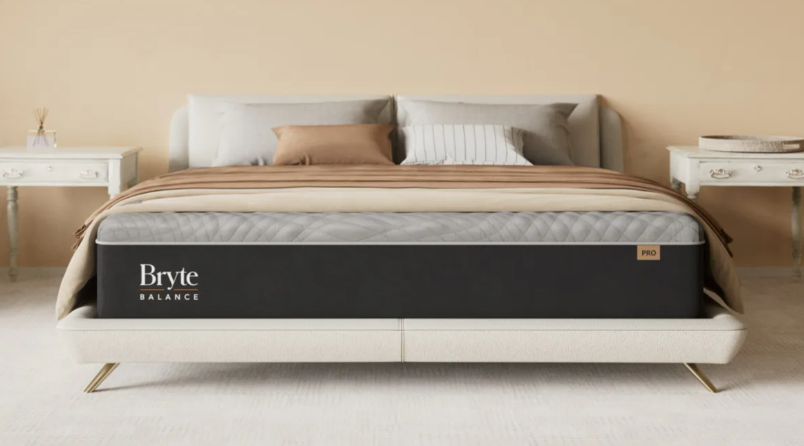
Bryte interests me for a different reason because its big idea is active pressure relief rather than active temperature control. Up to 90 Active Balancers sense small pressure imbalances across the body and respond in real time, and the Pro model can adjust firmness across as many as eight individual zones. Its embedded sensors provide sleep reports covering sleep stages, duration, efficiency, heart rate, and respiration without requiring a wearable.
For someone with persistent aches, that is more interesting to me than another generic “medium-firm” mattress description. I’m not suggesting that a smart bed is going to treat chronic neck pain, and I certainly wouldn’t buy one expecting it to cure mine. What I do know from experience is that discomfort can keep me shifting positions at night, so a mattress that changes support where pressure is building is at least addressing a physical part of the sleep environment rather than simply letting me know the next morning that I slept badly.
Temperature is the limitation here for the biohacker who runs hot. The Balance Pro has cooling fabric in the cover, but it does not offer the same active heating and cooling system as Eight Sleep or Climate360, so I’d put temperature ahead of pressure mapping if overheating were the thing consistently waking me up. Bryte is expensive enough that active pressure relief needs to solve a real problem for you, not just make the app more interesting.
Avocado Green Mattress: For the Biohacker Who Reads Material Labels
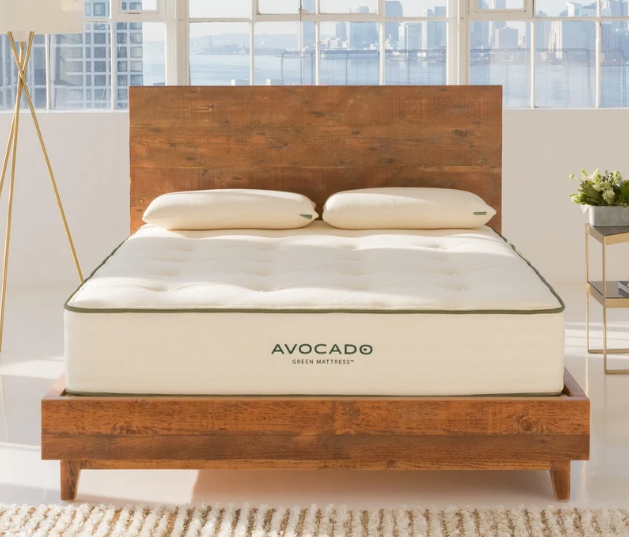
Some biohackers are less interested in making the mattress itself computerized and much more interested in what they are lying on for eight hours, which is where the Avocado Green Mattress earns a place. The finished mattress is GOTS-certified organic, it uses organic latex, wool, and cotton rather than polyurethane foam, and it comes with a one-year sleep trial and a 25-year limited warranty.
An organic certification does not automatically mean better HRV, deeper sleep, or faster recovery, but it does give a materials-conscious buyer more information about the product they are spending thousands of hours in close contact with each year.
There are no embedded HRV graphs or automatic temperature adjustments, but I don’t see that as an automatic weakness. A materials-first mattress paired with an active temperature-control system is probably more appealing to me than buying a smart mattress solely because it can generate data. The mattress can remain the relatively simple, long-lived part of the setup while the technology above it can change as sleep tech inevitably evolves.
Where I’d Spend the Money First
Biohacking gets expensive quickly because almost everything sounds reasonable in isolation. Between red light therapy, sauna, supplements, wearables, glucose monitors, massage devices, cold plunges, and lab panels, it is easy to build a recovery routine with its own operating budget. A bed is easier for me to justify because I’m using it every single night, whether I feel motivated or not.
I’d still fix the free problems before spending thousands of dollars. A smart mattress cannot compensate for staying up until 1 a.m. scrolling, drinking caffeine late in the afternoon, or only giving yourself six hours in bed. Adults generally need at least seven hours of sleep, and a reasonably consistent schedule with a dark, quiet, comfortable sleep environment is still the foundation underneath all of this technology.
Once those basics are in decent shape, putting money into the sleep environment becomes easier for me to defend. Active temperature control comes before collecting more data if overheating is disrupting sleep, while someone waking from pressure or firmness issues may get more from changing the mattress itself. Either way, the warranty, subscription costs, and likely replacement path belong in the buying decision from the beginning.
My Pick for Most Biohackers
For most people interested in sleep optimization, my pick is the Eight Sleep Pod 5, especially when there is already a mattress at home that feels good. It addresses the part of sleep technology I find most interesting, active control over the environment, while collecting the longer-term metrics I’d want if I were experimenting with meal timing, training, alcohol, bedtime consistency, or other habits.
The big appeal is that the system can respond during the night rather than simply handing me a report in the morning. After years of migraines and neck pain, I’ve had plenty of things in my health journey that required appointments, planning, or one more task to remember, so I appreciate recovery tools that can quietly do their job while I’m asleep. I don’t need my bed to congratulate me in the morning or give me another score to obsess over. I want to set up the best conditions I reasonably can, get into bed, and sleep well enough that I stop thinking about the bed entirely.