

- Eight Sleep Pod 5 Review - September 14, 2026
If you’re already tracking HRV, resting heart rate, sleep stages, and recovery scores, then I’m sure you’ve come across the Eight Sleep Pod 5 more than once. Unlike most sleep products, the Pod 5 isn’t marketed as a simple way to just sleep more comfortably. It’s actually more like a recovery tool. It claims to actively regulate your sleep temperature while collecting biometric data throughout the night. Now, that’s a pretty bold promise, especially when the system costs significantly more than most sleep trackers. So, is it actually worth adding to an athlete’s recovery stack?
Over the past several months, I have been sleeping on the Pod 5 while continuing my normal routine and strength training. As a certified sleep science coach (CSSC), I was interested in whether the system could do more than simply tell me how I slept. I wanted to know whether it could actually improve the conditions I was sleeping in and whether the recovery data would change anything about how I approached my day.
I also had a very personal reason for wanting to test it: I’m a chronic hot sleeper. Before using the Pod, I regularly woke up drenched in sweat, and I was tired of relying on passive cooling mattresses that only seemed to help for the first part of the night. After several months, I have some pretty strong opinions about the cooling, the tracking, the app, and the subscription. And they are not all positive.
Quick Overview
| Category | Rating |
| Cooling Performance | 5/5 |
| Recovery Features | 5/5 |
| Sleep Tracking | 4/5 |
| Ease of Setup | 2/5 |
| App Experience | 2/5 |
| Value | 2/5 |
| Overall | 3.5/5 |
These ratings reflect my personal experience with the Pod 5, including the adjustable base and subscription. The overall score is a rounded assessment rather than a mathematical average.
What Is the Eight Sleep Pod 5?
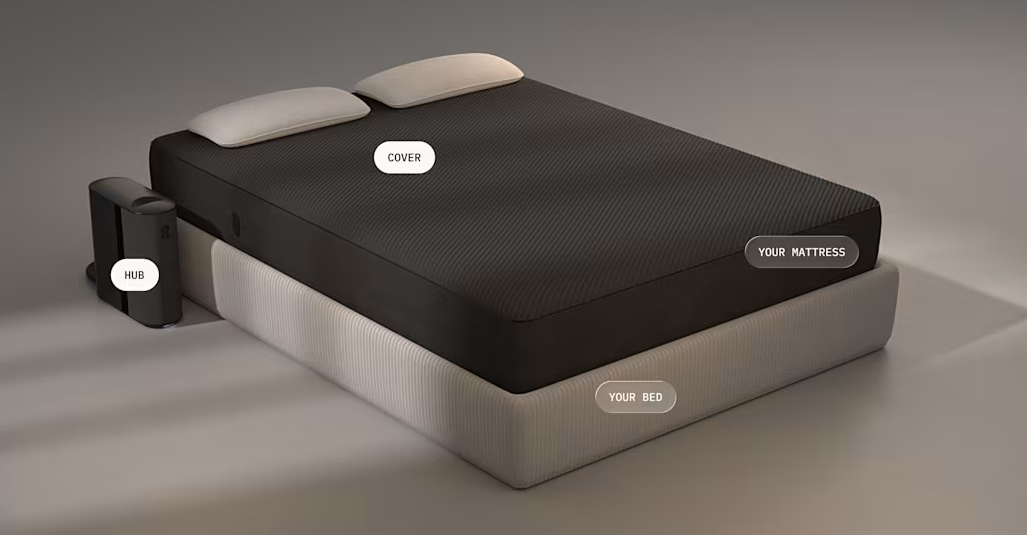
The Pod 5 is a temperature-regulating mattress cover that sits on top of your existing bed. Water circulates through an internal network of channels, allowing the system to actively heat or cool each side of the bed throughout the night.
With its Autopilot feature enabled, the Pod 5 automatically adjusts temperature based on your sleep profile preferences and overnight data. It also tracks metrics such as sleep duration, sleep stages, resting heart rate, HRV, and respiratory rate without requiring you to wear a device.
Depending on the configuration you purchase, the Pod 5 can also include an adjustable base that raises the head and legs as well as offers snoring-related features. I tested the version with the adjustable base, which is important to note because some of the features I discuss here are not available with every configuration.
Why Athletes Are Interested

Recovery is obviously crucial when you’re training, and getting stronger or faster isn’t just about what happens at the gym or the field. Adaptation happens afterward, during recovery, and, as a CSSC, I truly believe that sleep is arguably the single most important recovery tool we have.
Many athletes already track HRV, resting heart rate, sleep stages, and training readiness through devices like Whoop, Oura, Garmin, or Apple Watch. Some also invest in compression boots, massage guns, saunas, cold plunges, and mobility work in an effort to recover more efficiently between sessions.
The challenge is that most of those tools measure recovery after the fact. They tell you how you recovered, but they don’t necessarily improve the environment where recovery actually happens. Eight Sleep positions the Pod 5 differently because it actively changes your sleep temperature.
That doesn’t mean it’s going to improve every athlete’s recovery, but if overheating is already disrupting your sleep, addressing that problem could be more useful than just collecting another recovery score.
Cooling Performance
Many mattresses advertise cooling technology, but most rely on passive materials like gel-infused foam, breathable fabrics, or phase-change materials. Those can make a mattress feel cool initially, but they don’t actively remove heat throughout the night in the same way a water-based system does.
As a chronically sweaty sleeper, I can attest to the limitations of passive cooling. I’ve tested mattresses that feel wonderful when I first lie down, only to wake up hot and sweaty later. The Pod 5 works differently by circulating temperature-controlled water through the cover, allowing the surface temperature to continue adjusting long after you’ve fallen asleep. With Autopilot, you also don’t have to choose one temperature before bed and hope it remains comfortable until morning because it will adjust with you throughout the night.
For athletes, this could be especially useful after hard evening workouts, when an elevated body temperature may make it more difficult to fall asleep comfortably. I haven’t conducted a controlled test comparing my post-workout recovery with and without the Pod 5, but the cooling has made a meaningful difference to my own sleep.
My Experience After Several Months

My first night was interesting because I wasn’t immediately convinced I had slept better. I woke up thinking, “Okay, did this actually do anything?” But then I realized I hadn’t woken up dripping in sweat, and my sheets weren’t soaked. I was still a little damp, but considering how frequently I had been experiencing night sweats, that was a noticeable change. I also noticed that it takes me, on average, less than 30 minutes to fall asleep now, whereas before it would take me 45 minutes, up to an hour.
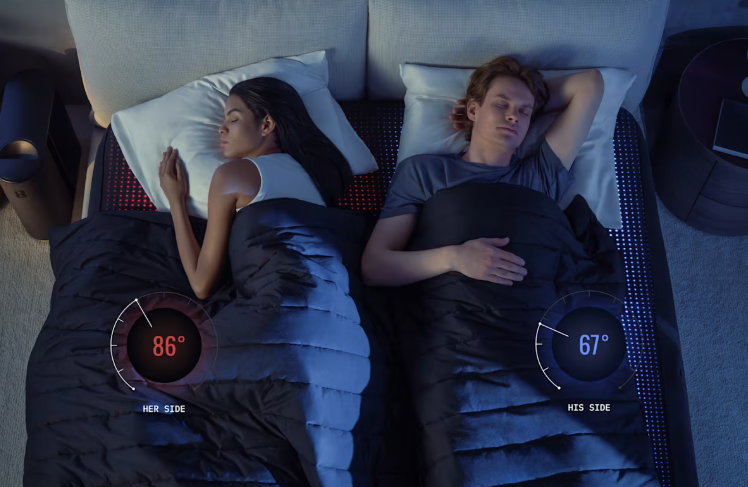
After several months, the difference has become very clear. I genuinely have not woken up drenched in sweat since I have been using the Pod 5. This has made a massive improvement to my sleep. I can also feel the temperature changing throughout the night. Autopilot tends to keep my side quite cool (-5), while my husband’s side runs warmer (+2) because he absolutely hates being cold. He’ll set his side to be warm even before he even gets into bed, which is something I could never do.
The dual-zone setup is one of my favorite parts of the system. We can sleep in the same bed without compromising temperature. There have only been a handful of times where I’ve manually lowered my temperature further, usually right when I’m getting into bed. Otherwise, I mostly let Autopilot do its thing.
For me, this is what makes the Pod special. Active temperature regulation is a completely different experience than simply sleeping on a breathable “cooling” mattress.
Recovery, Health Check, and Sleep Tracking
The Pod tracks HRV, resting heart rate, respiratory rate, sleep duration, and sleep stages. These can provide useful context when you’re trying to understand how your body responds to training, stress, illness, or changes in your routine. For example, if your resting heart rate is higher than usual and your HRV is lower than your normal baseline, that might be a reason to look more closely at your recovery. But I wouldn’t use one night of data to decide whether to skip a workout. Trends are key here.
I look at my sleep score every morning, along with how long I slept, my HRV, and resting heart rate. If something looks unusual, I’ll compare it with previous weeks. Otherwise, I usually glance at the data and move on with my life.
I’m not spending 20 minutes analyzing exactly when I entered REM sleep or when the Pod 5 detected snoring. For me, a lot of the tracking falls into the “huh, neat” category. I also want to note that the snoring detection is quite flawed. I have noticed that when the system’s alarm is going off to wake me up in the morning and vibrating the bed, the system registers the vibrating as me snoring. On the app, it looks like I spent 15 minutes snoring before waking up. The same thing is happening to my husband with his alarm. I decided to stop using the alarm just to stop the inaccurate snoring insights.
Health Check expands the system’s focus beyond ordinary sleep tracking by providing additional health-related insights and longer-term biometric trends. I can see why that would appeal to athletes, as these measurements may help aid with a recovery and training plan, but I wouldn’t treat it as a medical diagnosis or a definitive training-readiness tool. It’s another source of info that may help you decide when to pay closer attention to how you feel. These additional insights have not changed my routine.
Does It Replace Whoop or Oura?
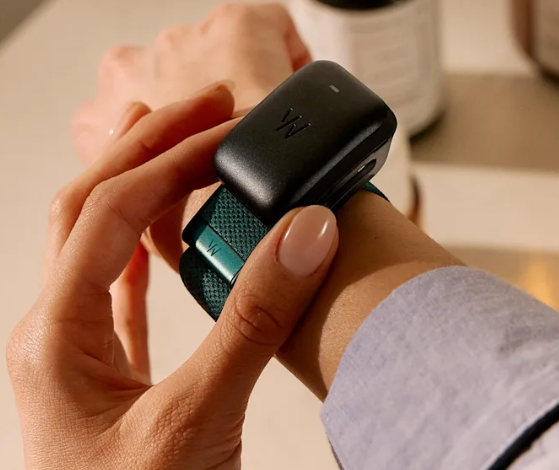
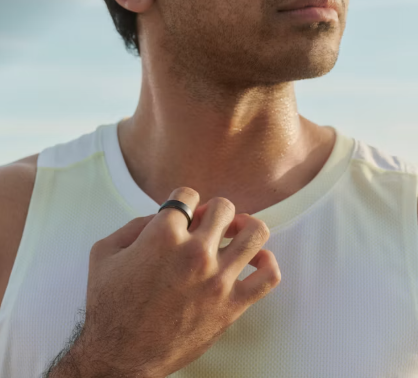
In my opinion, no—at least not if detailed recovery tracking is your main priority. The biggest advantage of Eight Sleep is that you don’t have to wear anything to bed. But based on my experience, I wouldn’t consider the Pod 5 as accurate for sleep tracking as a good wearable.
For example, one night my daughter came into bed and disrupted my sleep from around midnight to 1:30 a.m. I knew I was fully awake for a large portion of that time, but Eight Sleep recorded nearly all of it as light sleep.
I also used to wear an Oura ring, and based on my experience with that, Oura seemed better at distinguishing between lying awake and sleeping. My husband has used both an Apple Watch and Oura, and he has basically the same opinion.
This isn’t a head-to-head comparison, as I’m not wearing another tracker anymore, but I would still lean toward a wearable if I primarily wanted comprehensive training and recovery data. That being said, the Pod can be used alongside the Oura or Whoop if you’re really into data, but you would have duplicate data to look at and compare consistently, which could get tiring and repetitive. And, if the data ends up being different across both platforms, you might find yourself spending too much time trying to figure out which is correct instead of focusing on your training and recovery.
Setup, App, and Adjustable Base
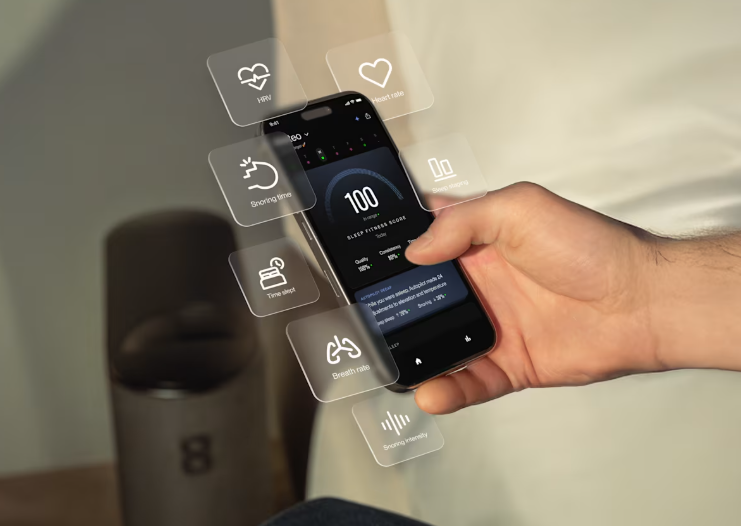
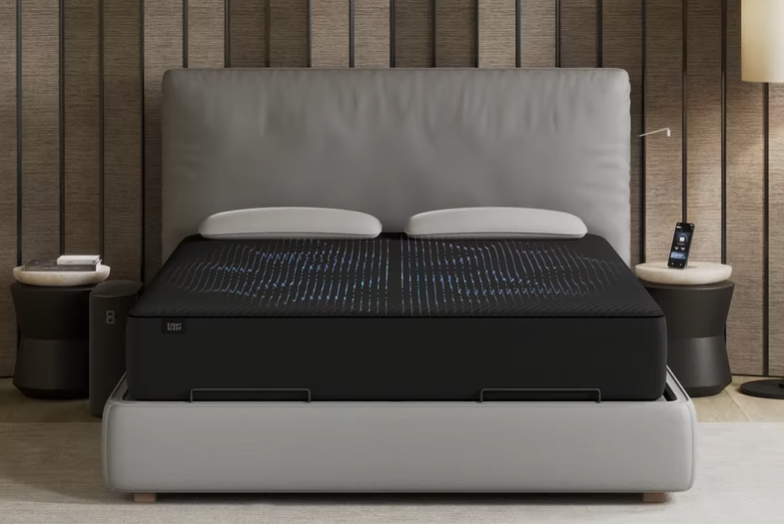
I have to talk about setup because it was one of the most frustrating parts of testing the Pod 5. The app wouldn’t let us complete the setup without signing up for a membership trial, but when we tried, it kept showing an error. Then we had to start the process all over again.
The setup included installing the system, calibrating it by rocking side to side while lying on the bed, and running tests to make sure the cooling, heating, and adjustable base were working properly.
The adjustable base was actually the coolest part for me. I was genuinely shocked by how much it raised the bed. The reading mode put me in the most perfect reclined position for sleep that it even relieved lower back strain. I honestly could fall asleep like that. The relax mode is a little wonky for my lower back, while the sleep position felt nice with my legs elevated slightly. Overall, I mostly just use the reading and flat modes.
Setting up my husband’s profile was another nightmare. The app kept showing my profile on both sides of the bed, and when I tried to remove it from one side, I accidentally removed the Pod 5 from our account. We had to repeat the connection and calibration process multiple times, and I genuinely wanted to chuck the whole thing out the window. To be fair, since we finally got everything connected, the system has been perfect. I haven’t had any connection problems during normal use.
The app itself still isn’t my favorite, though. There’s so much data that I find it overwhelming to look at. Once you’ve used it for a while, the menus make sense, but I don’t think it’s particularly intuitive or visually good at showing me what information matters.
I do appreciate being able to control the system using the buttons on the side of the bed instead of always opening the app.
Cost Over a Training Year
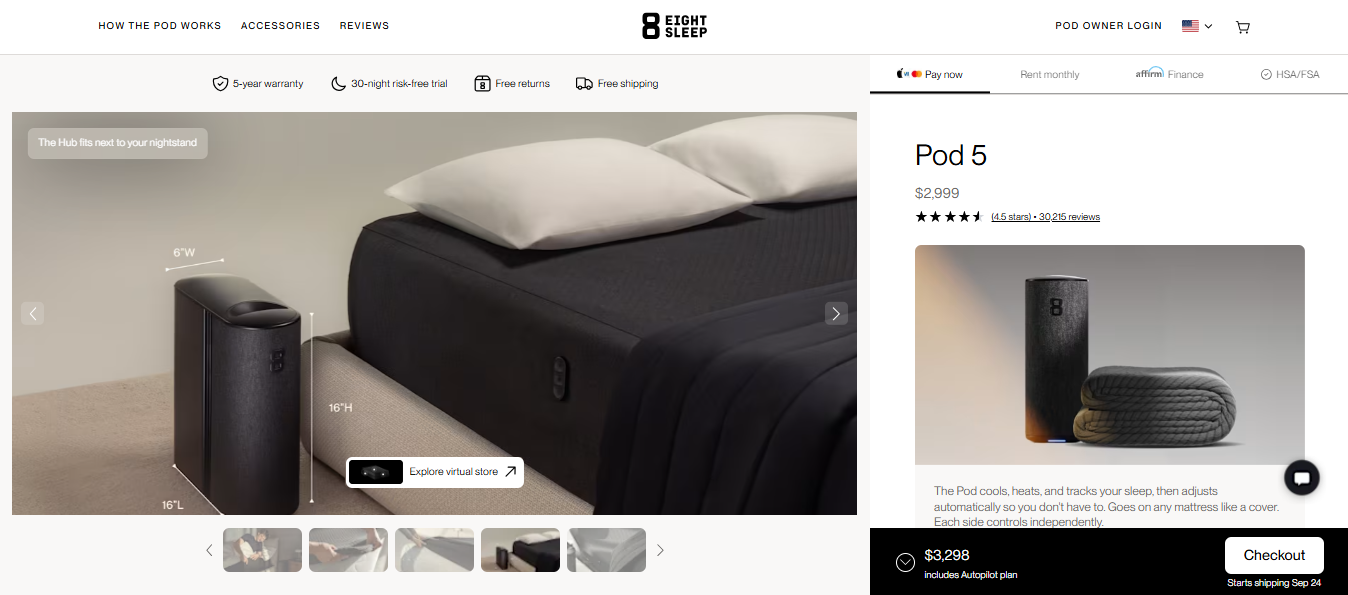
This is where my feelings about the Pod 5 get complicated. The Pod 5, for a queen-size mattress, costs $3,298 before any discounts or offers. That’s without the base. If you add the base, it’s $5,297. Then there’s the membership. When I signed up, I had to pay $199 up front for a year of the subscription to access the features I wanted. I wasn’t presented with a monthly billing option, and I found that incredibly frustrating.
The current membership structure includes Standard ($199/year), Enhanced ($299/year), and Elite ($399/year), with different levels of features and coverage. Even at $199 a year, I have a hard time swallowing the idea of paying an ongoing subscription to unlock some of the best functionality of a system that already costs thousands of dollars.
Final Verdict
After several months, I can confidently say that the Pod 5 has made a huge difference in my sleep. The active cooling has been the only thing that’s solved my biggest sleep problem, and I genuinely love being able to get into bed without worrying that I’m going to wake up drenched in sweat. But I also think it’s important to separate how much I love the product from whether I think it’s a good value.
The setup was a nightmare. The app needs work. The sleep tracking is interesting but imperfect. Snoring detection is flawed. And I still think putting some of the best features behind multiple membership tiers on a product this expensive is ridiculous.
Overall, the Pod 5 has its pros and cons:
Pros
- Outstanding active cooling
- Dual zone works extremely well
- Automatic temperature adjustments with Autopilot
- Health Check adds meaningful context
- Built-in tracking without needing a wearable
Cons
- Expensive initial investment
- Annual subscription required for many features
- Tracking not as accurate as wearable
- App feels cluttered
- Frustrating, time-consuming setup
For athletes, I think the Pod 5 makes the most sense if temperature is a genuine barrier to getting consistent, comfortable sleep. If you’re already sleeping well and primarily want more recovery data, I’d be much more hesitant. A dedicated wearable may offer more useful training-related information for significantly less money.
Ultimately, the Pod 5 is at its best when it’s solving a real sleep problem, not when it’s simply adding another dashboard to your recovery routine.