

- Best Vagus Nerve Stimulation Device - May 4, 2026
Review by Dr. Trevor Jackson, DC, MS, CCSP, Licensed chiropractor and Certified Chiropractic Sports Physician specializing in sports rehabilitation and nervous system health, Mobile, AL.
In my clinical practice, I’ve started to see a pattern. Patients often end up in my office after trying multiple approaches without clear answers, wondering if “a chiropractor might be able to help.” They’ve been to their primary care doctor, they’ve seen specialists, and repeatedly, they’ve been told “everything is normal.” When I step back and look at the common thread in these cases, one thing stands out: their nervous system doesn’t seem to be regulating the way it should, and vagus nerve activity could be part of the picture.
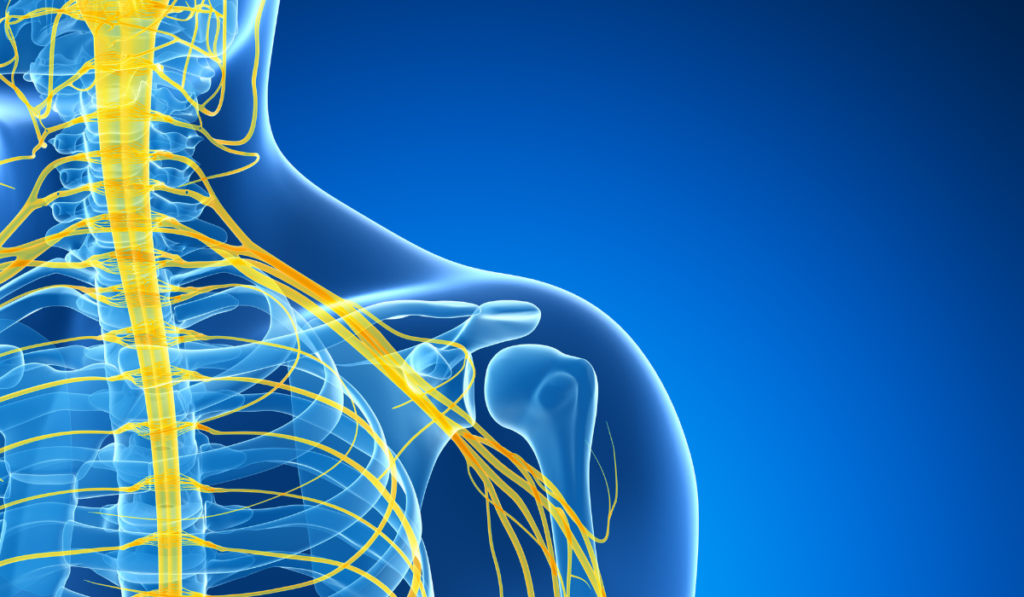
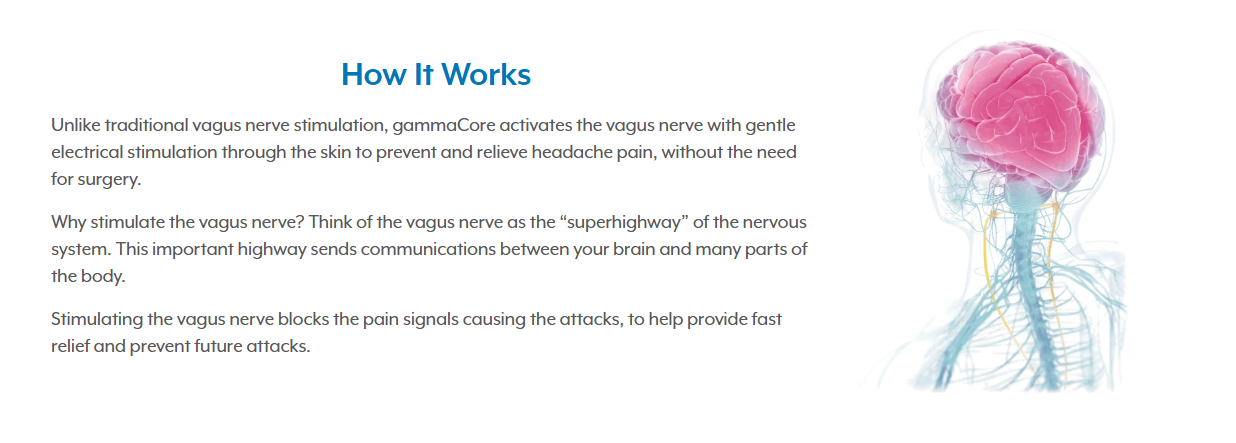
The vagus nerve is one of the longest and most influential nerves in the body. It connects your brain to your heart, lungs, gut, and immune system, and it plays a central role in shifting your body from a stressed-out “fight or flight” state into a calmer “rest and digest” mode. If unregulated or out of sorts, my patients have often reported feeling overly stressed and anxious, having poor sleep, headaches, brain fog, constipation, or even sluggish workout recovery.
For years, vagus nerve stimulation (VNS) required surgery. A device would be implanted in the chest and wired to the nerve, a procedure, due to its invasiveness, reserved only for treatment-resistant epilepsy and severe depression. The good news is, all that has changed. A growing number of non-invasive, consumer-grade devices now let you stimulate the vagus nerve at home, through external stimulation at your ear, neck, or even your wrist.
But not all of these devices work the same way. Some use electrical stimulation and others rely on vibration. The differences between them matter, especially when you’re spending anywhere from $250 to $900. Let’s find the Best Vagus Nerve Stimulation Device for your needs..
Evaluation Points for These Devices
Before diving into each one, it’s worth understanding what sets these devices apart from each other. For each device, we’re going to look at each of these points:
- Clinical evidence
- Stimulation method
- Practical usability
- Cost of ownership
- Regulatory status.
Side-by-Side Comparison
| Device | Stim Type | Placement | Clinical Studies | Gel? | Price | Time | Ongoing Costs |
| Nuropod | Electrical (taVNS) | Ear (wearable) | 50+ completed studies | No | ~$900 | 15–60 min/day | None |
| Pulsetto | Electrical (tcVNS) | Neck (wearable) | Limited device-specific | Yes | ~$278(Lite) ~$296 (Fit) | 4–20 min | Gel refills; companion app used for control |
| gammaCore | Electrical (tcVNS) | Neck (handheld) | Extensive; FDA-cleared indications | Yes | ~$598/mo* | 2 min | Monthly subscription (prescription required) |
| Truvaga Plus | Electrical (tcVNS) | Neck (handheld) | Shares specs w/ gammaCore | Yes | ~$499 | 2 min | Gel refills; app-enabled (no required subscription) |
| Truvaga 350 | Electrical (tcVNS) | Neck (handheld) | Shares specs w/ gammaCore | Yes | ~$299 | 2 min | Gel; device disposable after 350 sessions |
| Apollo Neuro | Vibration (haptic) | Wrist/ankle/ clip | Peer-reviewed vibration studies | No | ~$349 | 30 min – all day | Optional premium membership (SmartVibes) |
*gammaCore pricing is not publicly listed on their website. The ~$598/month figure is an approximate out-of-pocket cost based on pharmacy and manufacturer sources. Actual cost varies by insurance coverage, co-pay assistance, and pharmacy fees.
Nuropod
Price: ~$855–$900
Placement: Ear (tragus clip)
Stimulation: Electrical (taVNS)
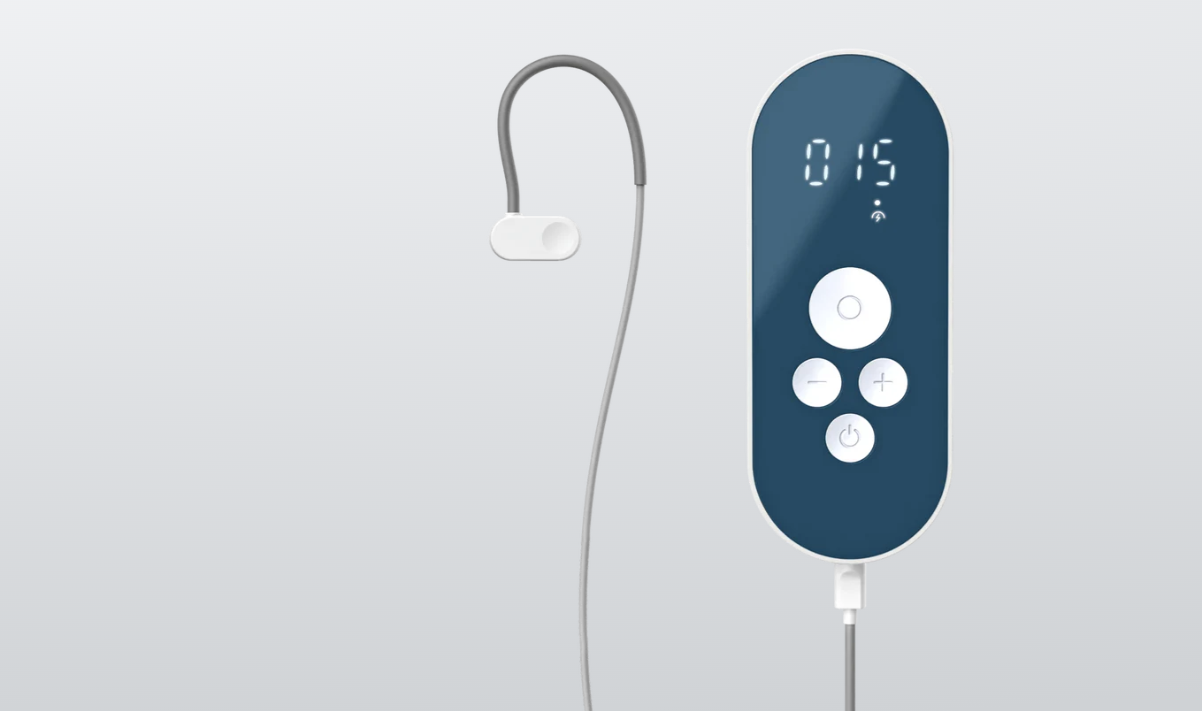
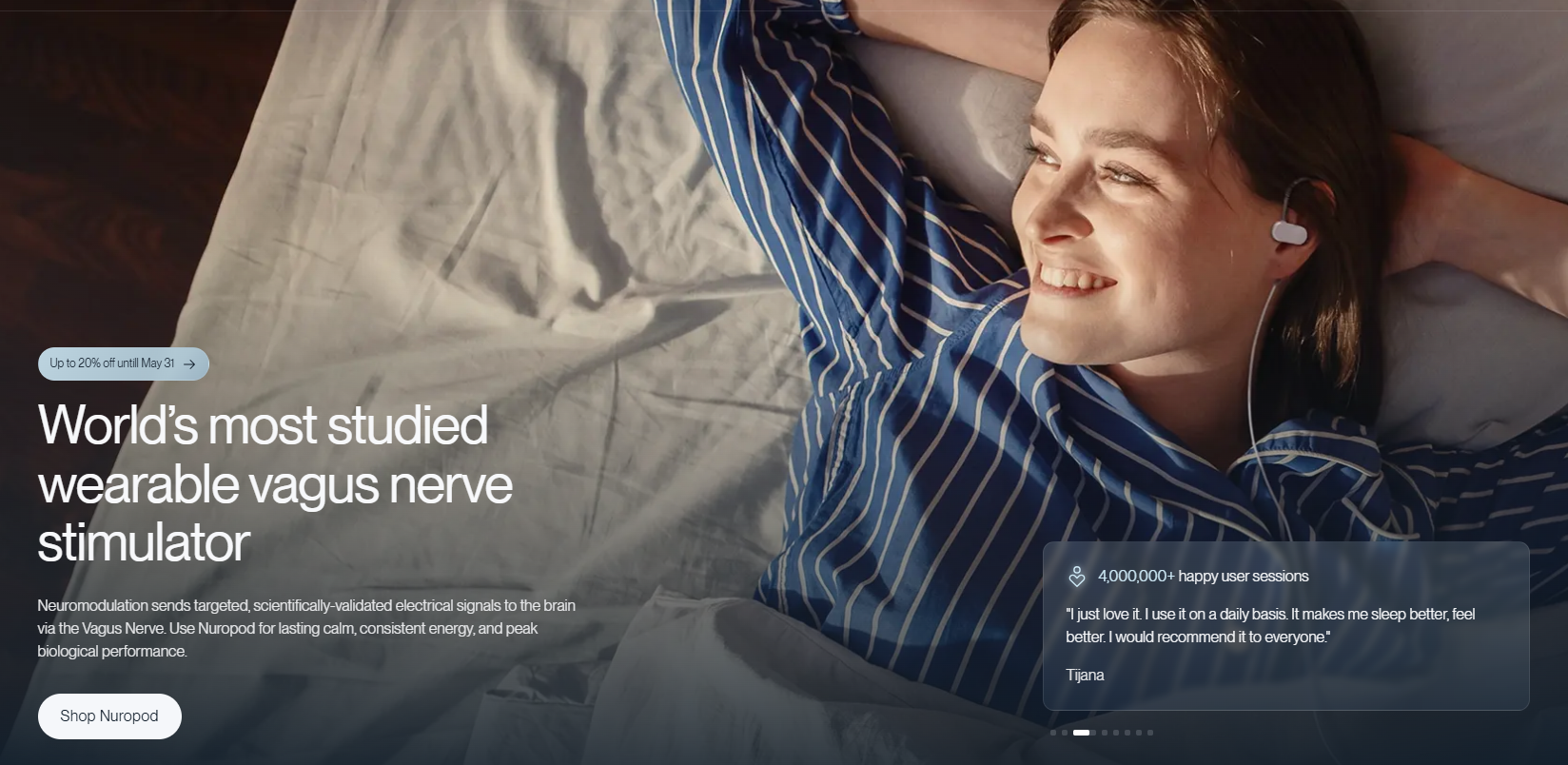
Nuropod is the U.S. brand name for Parasym’s flagship vagus nerve stimulation device. The company markets the same core technology under different names depending on region. Nurosym is sold in the UK, Europe, and most international markets, where it is certified as a medical device. Nuropod is the version used in the US, Canada, Australia, and New Zealand.
What sets it apart: Nuropod uses Parasym’s patented AVNT™ (Auricular Vagal Neuromodulation Therapy), a clinically studied approach that targets the auricular branch of the vagus nerve at the tragus. This area is one of the most accessible points where the vagus nerve sits closest to the skin, allowing for more direct and precise stimulation compared to other external approaches.
Unlike many general wellness devices, the underlying technology has been developed over more than a decade and is supported by a large body of clinical research specific to this method of stimulation.
The research behind Parasym’s AVNT™ technology is one of the more extensively studied platforms in the consumer VNS category. The company points to 50+ completed clinical studies, along with more than a decade of research and development behind the platform. Findings from randomized, placebo-controlled studies have reported changes in physiological markers, including measures such as vagus nerve activity and heart rate variability (HRV), which are commonly studied in relation to autonomic nervous system function.
Practical notes: Nuropod doesn’t require gel, which is a real advantage for daily use. You clip it on, set your intensity level (45 adjustable levels), and go about your day. Most run sessions of 15 to 60 minutes, but the device is built for long-term, not episodic, use. Battery life lasts about a month on a single charge. The device comes with a 30-day money-back guarantee, a 2-year warranty, and is HSA/FSA eligible in the U.S.
Who it’s best for: People who prioritize strong clinical research in a consumer device and are comfortable with a higher upfront cost, in exchange for a simple, consistent routine with no consumables or ongoing subscriptions. It may be especially relevant for those looking to support recovery, manage stress, or address ongoing fatigue.
Drawbacks: It’s the most expensive device on this list. And while the research portfolio is impressive, individual results still vary. Reports suggest noticeable changes within the first week; others take several weeks of consistent use.
Pulsetto
Price: ~$278 (Lite) / ~$296 (Fit)
Placement: Neck (wearable)
Stimulation: Electrical (tcVNS)
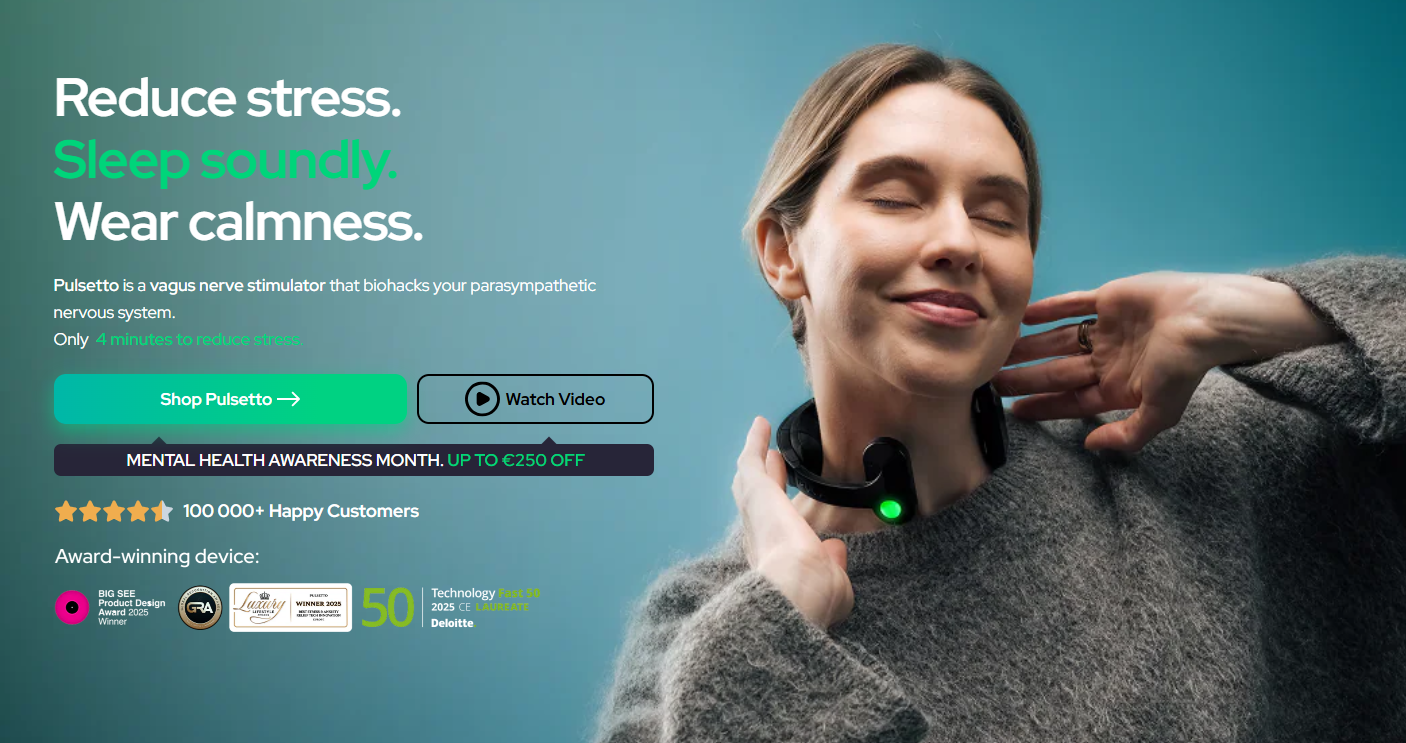
Pulsetto is a neck-worn VNS device that delivers electrical pulses through two electrodes that sit on either side of the neck, stimulating the cervical branch of the vagus nerve bilaterally.
What sets it apart: It’s one of the most affordable electrical VNS devices on the market, and its dual-electrode design stimulates both sides of the nerve simultaneously. The companion app offers five pre-built programs targeting stress, sleep, anxiety, burnout, and pain, along with guided soundscapes.
Practical notes: Sessions run 4 to 20 minutes, depending on the program. The device does require conductive gel, which adds an ongoing replacement cost. The app is required for operation, and it needs a Bluetooth connection to function. Battery life runs 8 to 12 days. Some people with smaller necks report fit issues, though the “Fit” model was redesigned to be adjustable to address that.
Who it’s best for: First-time VNS users who want to try electrical stimulation without a large financial commitment. Also, it’s a solid pick for people who prefer guided, app-based sessions.
Drawbacks: Very little device-specific clinical research (compared to Nuropod, for example). Because it’s neck-based, the signal has to pass through muscle and tissue before reaching the vagus nerve, which can make stimulation less direct and more variable. The gel requirement also adds an extra step to daily use. And since sessions are shorter and require setup each time, Pulsetto tends to be more of an episodic tool rather than something you can use consistently for longer, passive sessions.
gammaCore

Price: ~$598/month (estimated; not publicly listed)
Placement: Neck (handheld)
Stimulation: Electrical (tcVNS)
Made by electroCore, it’s the first device for treating and preventing multiple types of headaches through vagus nerve stimulation. It is only cleared by the FDA, however, for headaches.
Why it’s on this list: Its technology has been studied in numerous peer-reviewed, randomized controlled trials, and it’s what other devices are often compared against.
Practical notes: gammaCore requires a prescription and operates on a monthly subscription model. It’s a handheld device that you hold against your neck for two-minute sessions, using conductive gel. The device usually has to be refilled monthly. Pricing isn’t listed on their website, but pharmacy sources and electroCore’s customer support team have quoted approximately $598 per month out of pocket. The company offers a co-pay assistance program that can reduce that by up to $100 per month for eligible patients. Insurance coverage varies, but it is HSA/FSA eligible.
Who it’s best for: People with a diagnosed headache condition who want an FDA-cleared treatment option and have a prescribing physician involved in their care. It’s not a general wellness product.
Drawbacks: Not available without a prescription, and the monthly cost is higher than that of any consumer device. It’s specifically indicated for headache conditions, not general stress or wellness support, and most of its clinical research is focused on that area. The neck access point can also be limiting, and because it’s a handheld device, it can be difficult to maintain consistent positioning during sessions, which may impact usability and continuity.
Truvaga
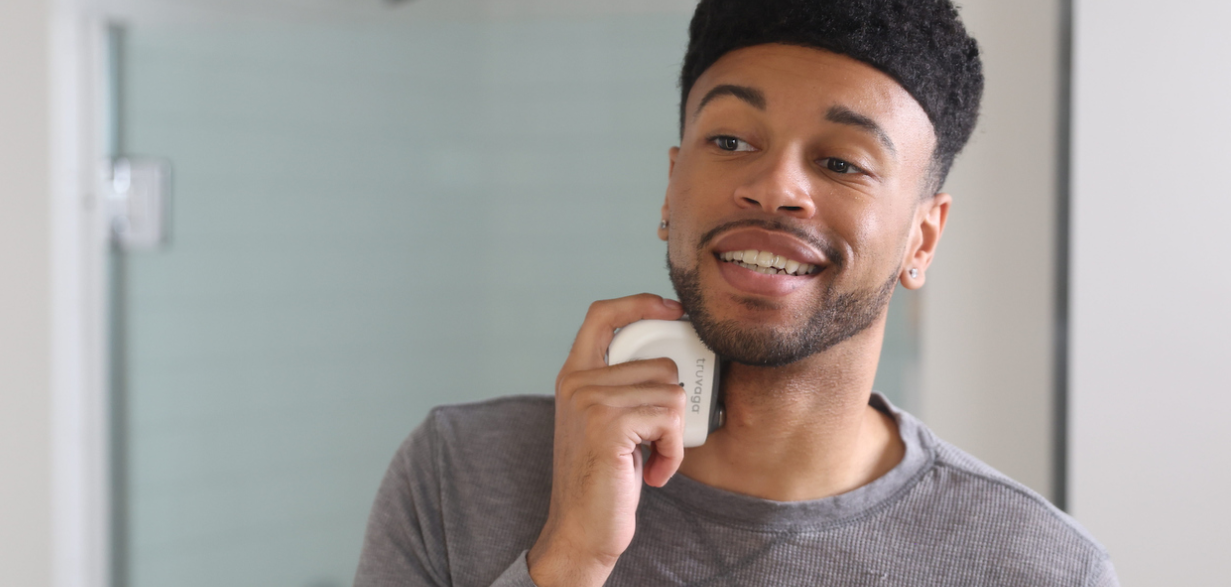
Price: Truvaga “Plus” ~$499 / “350” ~$299
Placement: Neck (handheld)
Stimulation: Electrical (tcVNS)
Truvaga also comes from electroCore, the same company behind gammaCore, which we just addressed above. Both of the Truvaga models share near-identical technical specifications with gammaCore, operating at the same frequency and pulse parameters that have been validated in successful clinical research.
What sets it apart: Uses stimulation parameters similar to those reported in electroCore’s clinical research literature without requiring a prescription. Similar to the gammaCore, sessions last just two minutes.
The two models: Truvaga offers two distinct versions, and they’re different enough that it’s worth differentiating between them before you buy.
The Truvaga Plus ($499) is the flagship. It’s rechargeable, offers unlimited sessions, and pairs with a free mobile app that lets you adjust intensity, set session reminders, and track your progress over time. It’s the smaller and sleeker of the two, designed for portability. It comes with “Signaspray” electrode solution for conductivity, though you can use the gel as well. This is the model to pick if you plan to use the device long-term.
The Truvaga 350 ($299) is the simpler, lower-cost option. It comes pre-loaded with 350 two-minute sessions, which works out to roughly six months of daily use. It requires no app, no Bluetooth, and no charging. You turn it on and go. It comes with their “Signagel” for conductivity, but you can get the spray off their website as well. The tradeoff is that once those 350 sessions are used up, the device is done. You’d need to buy a new unit. There’s also no way to track sessions or adjust settings through an app.
Practical notes: Both models are handheld. You hold the device against the side of your neck during each two-minute session, which means you can’t really multitask while using it. At two minutes, that’s a minor inconvenience. Both require a conductive medium (spray or gel), which is an ongoing cost.
Who it’s best for: People who value speed and simplicity in their routine, those who are specifically interested in the electroCore research platform, and anyone looking for the closest over-the-counter equivalent to a prescription VNS device. The 350 is a good entry point if you want to test the waters before committing to the Plus.
Drawbacks: The handheld design means you need to actively hold the device in place during sessions, which can make it harder to maintain consistent positioning and continuity. Stimulation is applied at the neck, which can feel sensitive or less convenient for some users. It’s better suited for short, episodic sessions rather than longer or continuous use. Despite sharing specs with gammaCore, Truvaga itself is marketed as a wellness device and has not been independently cleared by the FDA.
Additionally, the cost of the 350 may feel high for a device that cannot be reused or resold once the charge runs out, making the Plus a more practical long-term investment within the same product line.
Apollo Neuro

Price: ~$349
Placement: Wrist, ankle, or clip-on
Stimulation: Vibration (haptic)
Apollo Neuro is the outlier on this list because it doesn’t use electrical stimulation at all. Instead, it delivers low-frequency vibrations through your skin, working on the principle that rhythmic touch patterns can signal safety to the nervous system and influence vagal tone.
What sets it apart: It’s the only device here designed for extended, all-day wear. The companion app offers multiple “Vibes” (vibration patterns) for different purposes: sleep, focus, energy, social settings, calm, and recovery. Published research from the University of Pittsburgh, by Rabin D, et al, shows that the specific vibration frequencies used by Apollo has been associated with improvements in HRV and stress-related measures in published studies..
Practical notes: You strap it to your wrist or ankle, or clip it to clothing (near your chest), pick your “Vibe”, and let it run. No gel, no sitting still, no holding anything. The brand recommends at least three hours daily for best results. There is an optional SmartVibes AI premium membership that uses your data to personalize vibration patterns.
Who it’s best for: People who want passive, background-level nervous system support throughout the day. Especially popular with people managing ADHD, PTSD, sensory processing issues, and general anxiety, where the gentle, ongoing stimulation seems to shine.
Drawbacks: Unlike electrical VNS devices, Apollo Neuro doesn’t directly target the vagus nerve. While vibration-based stimulation can support relaxation, it’s generally considered a broader nervous system signal rather than true vagus nerve stimulation. Because of this, the effects may feel less targeted compared to electrical devices designed specifically for cervical vagus nerve activation. Results also tend to be more subtle and cumulative, often requiring consistent use over time rather than delivering immediate impact. Additionally, the premium membership model introduces an ongoing cost for full functionality.
A Clinician’s Perspective
As a chiropractor who works with patients dealing with pain, inflammation, and nervous system dysregulation daily, I find the growing body of VNS research fascinating and encouraging. The vagus nerve is central to how the body manages stress, inflammation, and recovery. When vagal tone is low, we might see it show up as poor sleep, chronic fatigue, digestive issues, slow recovery from injuries, and difficulty managing stress.
Transcutaneous stimulation of the auricular branch of the vagus nerve at the tragus has been explored in controlled clinical studies, with measurable changes in autonomic markers. Previously, my primary tools for influencing these pathways were indirect approaches like breathing techniques. Now, non-invasive stimulation offers a more direct way to engage these mechanisms as part of a broader support system for nervous system regulation and recovery.
That said, I’d encourage anyone considering a VNS device to treat it as part of a wider approach, not a standalone solution. If you pair it with movement, good sleep habits, proper nutrition, and stress management practices, you’ll experience much better and lasting results. But don’t just take an online doctor’s advice; make sure to talk to your healthcare provider about what you have going on before making serious health decisions.
Bottom Line: Which Device Should You Buy?

There’s no single “best” VNS device for everyone. The right pick depends on your symptoms, your budget, and what fits into your daily routine. I work with people every day who have spent months or years trying to figure out why they can’t sleep, can’t recover, or can’t shake the feeling of being tired all the time. If that sounds familiar, you’re not out of options. The research in this space is getting stronger, and the decisions are getting better. Give one a shot, be consistent with it, and pay attention to what your body tells you. Here are some points to consider:
If clinical research is your top priority, Nuropod has the deepest evidence base of any consumer device, with 50+ studies using its specific AVNT technology. It is designed and scientifically validated to reach the nerve, activate it, and deliver stimulation in a consistent, repeatable way each session.
If you want to try VNS without a big financial commitment, Pulsetto Lite gives you electrical vagus nerve stimulation at the lowest entry point on this list.
If you want the shortest possible sessions, Truvaga gets it done in two minutes and shares its DNA with an FDA-cleared prescription device. The Plus ($499) is better for long-term use; the 350 ($299) is a lower-risk way to try it out.
If you prefer passive, all-day support, Apollo Neuro is a lifestyle-friendly option. That said, it’s not really comparable to traditional VNS devices as it doesn’t stimulate the vagus nerve directly, and its vibration-based approach is better understood as general sensory input rather than targeted neuromodulation.
If you have a diagnosed headache condition, talk to your doctor about gammaCore. It’s the only FDA-cleared option for that specific use case.
Whatever you choose, give it time. Most VNS devices show their full effects over weeks of consistent use, not a single session. Start at a low intensity, build gradually, and again, pay attention to how your body responds.
Disclaimer: This article is for informational purposes only and does not constitute medical advice. The devices discussed here (with the exception of gammaCore) are consumer wellness products and have not been evaluated by the FDA to diagnose, treat, cure, or prevent any disease. Consult your healthcare provider before beginning any new health intervention.